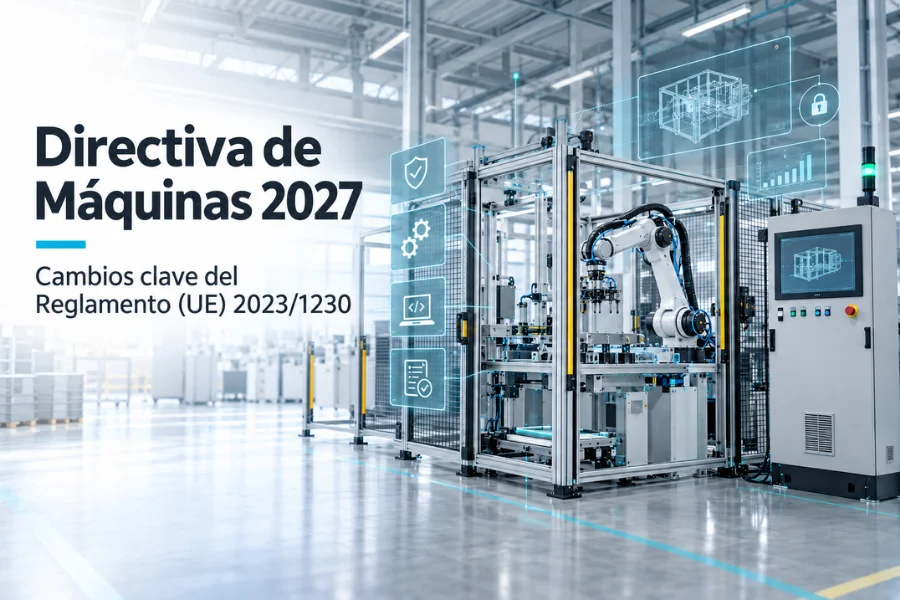

A Declaration of Conformity is the determination of the degree of compliance with regulations, national or international technical standards, or other specifications, requirements or characteristics of a product or service. It may include, amongst other things, sampling, testing, calibration, certification and inspection/verification procedures. Every product, machine, process, method, installation, service or activity must comply with some form of technical standard or regulation.
When it comes to industrial safety, machinery manufacturers must carry out a risk assessment of their machinery and ensure that it complies with certain standards before placing it on the EU market.
The above procedure is known as conformity assessment and must be carried out during both the design and production phases. Even if the two steps mentioned above are outsourced, manufacturers remain responsible for ensuring that the conformity assessment is carried out.
The information taken from the declaration of conformity must be included in the technical documentation (which is required in any case) in order to obtain the CE marking.
How we demonstrate compliance with EU regulations
Machinery manufacturers must check whether any EU standards apply to their machines and, if so, ensure that they comply with these standards before the machines can be freely placed on the market in the EU.
If there were harmonised standards, these could help demonstrate compliance with EU regulations.
But what are harmonised standards? Harmonised standards are drawn up by standardisation bodies such as the European Committee for Standardisation or the European Committee for Electrotechnical Standardisation. The application of harmonised standards in the design and manufacture of machinery ensures that it complies with the relevant European Union regulations. This is what we refer to as the ‘presumption of conformity’.
Our clients often ask us whether they are required to apply harmonised standards. The truth is that they are not; the use of harmonised standards is voluntary. Manufacturers are always free to choose other technical solutions to demonstrate compliance with legal requirements. Manufacturers may demonstrate conformity by referring to other technical specifications (for example, national standards, non-harmonised European and international standards, or their own technical specifications). In that case, they must provide further details in the technical documentation explaining how each product meets the legal requirements.
Conformity assessment carried out by the manufacturer or a third party acting on their behalf
The manufacturer or third parties responsible for verifying compliance with regulations are responsible for issuing the declaration of conformity for the machinery.
At Grupo TICE Ingenieros, we are experts in industrial safety and can help you draw up both the Declaration of Conformity and the Technical File for your machinery. Please feel free to contact us with no obligation on 961 55 40 72 or by emailing us at comercial@grupotice.es.