
Industrial Automation and Electricity

Integrated Solutions in Electrical Panels, Control, and Industrial Modernisation.

Industrial Automation and Electrical Experts

At Grupo TICE, we specialise in industrial automation and electrical engineering, with a technical focus geared towards reliability and operational continuity. At Grupo TICE, we design and manufacture industrial electrical panels, automate processes, and modernise obsolete control systems so that your plant gains reliability, clear diagnostics, and operational continuity. 


We have a multidisciplinary engineering team that works with rigour, coordination and a global vision, understanding the real context of each installation. Our objective is to provide solid and sustainable solutions, with methodology, precise documentation and careful execution, so that each intervention generates value and improves the performance of the industrial environment.
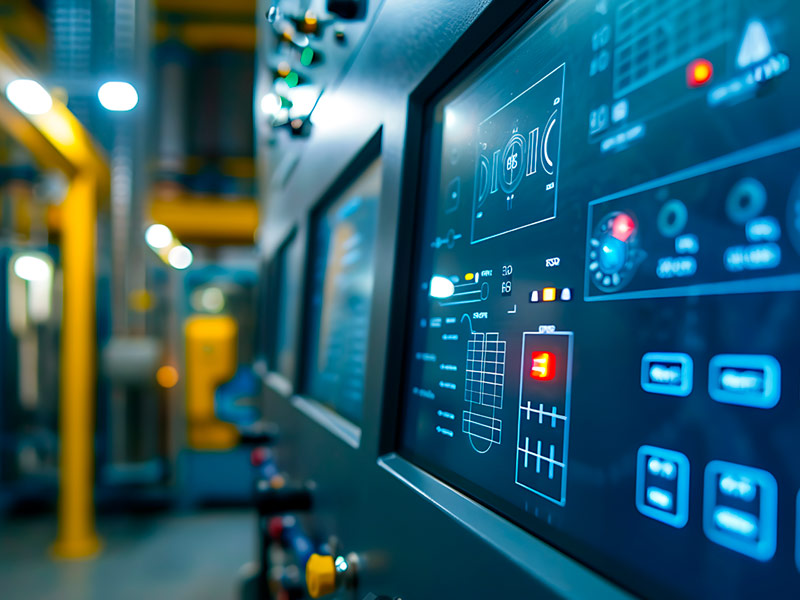

Industrial Automation and Electrical Problems We Solve

Timely detection and correction of issues in the electrical and control system are key to preventing downtime, improving safety, and ensuring process stability. At Grupo TICE, we approach each situation with technical expertise and a global perspective, seeking solutions that reduce hidden costs, increase plant availability, and facilitate long-term maintenance.

Micro-stops.

Micro-stoppages due to saturated circuits, disorganised wiring, or incorrectly sized protection devices. We identify the source and stabilise the installation to reduce repetitive shutdowns and breakdowns.

Old PLCs/HMIs.

We reduce the risk of obsolescence and strengthen control to improve response, diagnosis, and operational availability.

Non-existent or Outdated Plans.

We have updated the technical documentation to enable maintenance and engineering to work safely, with traceability and reliable criteria.

Poorly Made Integrations.

We are reviewing new variable speed drives, servos and sensors to eliminate intermittent faults and ensure stable and predictable operation.

Need for Quality and Traceability.

We integrate artificial vision and process data to ensure quality, operational monitoring, and evidence-based decisions.

Industrial Electrical Panel Design and Manufacturing

The industrial electrical panel design and manufacturing service involves developing electrical cabinets designed to operate reliably in demanding environments and facilitate maintenance work. At Grupo TICE, we have a team of experts in industrial electrical engineering who define tailor-made solutions for each plant, creating power, control, and automation panels aligned with your process, your standards, and daily operations.

We design and manufacture electrical panels

We convert process and maintenance requirements into clear, organised electrical panels, ready for reliable operation, ensuring technical documentation that facilitates operation and future expansions.

Electrical Schematic Design in EPLAN

Single-line diagrams, developed, terminals, lists, references and “as-built” documentation.
Leave the project perfectly documented for maintenance, audits, and modifications without uncertainty.

Component Integration and Control Architecture

Protections, power supplies, PLCs, drives/servos, safety relays, instrumentation, and industrial communications. Guarantees system compatibility and consistency to avoid failures, facilitate diagnostics, and ensure operational stability.

Special Frames and Updating Existing Frames

Bespoke electrical enclosures for machinery: Specifically designed for your team, integrating power and automation according to the real needs of the machine.

Cabinets for demanding environments Designed and selected to work reliably in complex industrial conditions (dust, vibration and temperature), protecting components and ensuring operational continuity.

Internal re-engineering of existing frameworks: We optimse the interior of the frame (organisation, cabling, identification) to improve security, facilitate maintenance, and reduce incidents due to errors or confusing connections.

Modernisation of existing panels: We updated the system (change of logic, control, power) to adapt it to new needs, improve performance and increase the reliability of the installation.

Regulations and Verification in Industrial Electrical Panels

At Grupo TICE, we approach each project with a rigorous focus on regulatory compliance and verification, ensuring that the design and execution align with applicable regulatory requirements. Our aim is to guarantee safe, reliable, and auditable installations, reducing technical risks and facilitating operation and maintenance in demanding industrial environments.

IEC/UNE-EN 61439.

We apply the requirements and checks of the standard for low-voltage assemblies, ensuring that the panel meets the design, construction, and validation criteria specific to “assemblies”, with a focus on safety, reliability, and technical traceability.

IEC 60204-1.

When the panel forms part of machinery, we align the project with the standard for electrical equipment of machines and associated systems, ensuring safe integration with the machine, functional consistency, and appropriate protection criteria for its operation.

Send us photos of the Board and the Brand/Model of the Equipment, and we will prepare a Quote for you.

Industrial Automation

At Grupo TICE, we specialise in industrial automation for demanding production environments. We design and implement control systems aimed at reducing downtime, improving operational efficiency, and simplifying maintenance, always in line with regulations and the plant’s reality. We analyse how each machine or line works and translate that production logic into a robust, secure, and scalable automation system, ready to evolve with your process and provide clear everyday diagnostics.

Industrial Automation Solutions

At Grupo TICE, we develop industrial automation solutions designed for real plant environments: greater stability, fewer incidents, and more agile maintenance. We apply a technical and verifiable approach to improve efficiency and operational continuity, with clear diagnostics and systems ready to evolve.

PLC programming

Structured and maintainable programming, with clear sequences, useful alarms and maintenance-oriented diagnostics to locate faults quickly and reduce downtime.

Process Design and Automation

Control architecture with safety interlocks, cycle optimisation and integration of drives, servos and industrial networks to stabilise the process and improve operational efficiency.

Machine Vision Systems

Quality control and process verification with presence/absence detection, guidance, code reading, and traceability, generating reliable data to reduce rejections and ensure online monitoring.

Industrial Automation Verification Normative and Approach

At Grupo TICE, we apply a rigorous approach to regulatory compliance and verification in every industrial automation project, adapting requirements to the actual scope of the installation. Our goal is to ensure safe, reliable, and auditable control systems, reducing operational risks and facilitating maintenance. Depending on the project, we work under the following frameworks.

IEC / UNE-EN 60204-1.

When automation is part of machinery, we align the design and integration of control with the safety requirements of electrical equipment and its operation on-site.

ISO 13849-1.

We define and verify safety functions in the control system, ensuring that the architecture and components respond to the required reliability level.

IEC 61131-3.

We apply good PLC programming practices and standards to achieve structured, maintainable, and consistent software, facilitating diagnostics and future expansions.

Machinery Directive 2006/42/EC.

When automation affects safety functions, we consider the Directive's requirements to ensure conformity, technical traceability, and secure integration with the machine.

Modernisation of Industrial Control Systems

At Grupo TICE, we specialise in the modernisation of industrial control systems, helping plants to evolve without the risk of a total replacement. We design strategies that extend machinery lifespan, improve safety, and reduce the risk of critical downtime due to obsolescence, adapting each intervention to the reality of production and the future maintainability of the system.

Industrial Control System Modernisation and Retrofit Services

A well-planned modernisation boosts operational continuity and machinery performance. It allows for improved safety, enhanced control stability, and easier maintenance with clearer diagnostics. At Grupo TICE, we apply industrial engineering criteria and validation to every intervention to achieve measurable and sustainable plant improvements.

Electrical Panel Refurbishment

Partial or complete redesign of the control panel, upgrade of critical components, and improvement of layout, ventilation, and safety to increase reliability and ease maintenance.

Migration of PLCs and Obsolete Platforms

Replacement of old controllers with current platforms, maintaining process logic and validating operation to reduce risks from obsolescence and critical stoppages.

System Modernisation

Hardware and software updates, integration of new devices and improvement of system diagnostics to achieve greater stability, traceability and scalability.

Regulations and Verification in Industrial Electrical Panels

At Grupo TICE, we apply a technical verification approach to ensure the modernisation of industrial control systems is safe, stable and consistent with the regulatory requirements of the industrial environment. This criteria reduces risks, improves maintainability and ensures a reliable start-up. Depending on the scope of the project, we evaluate the impact of each change and work under the following regulatory frameworks:

IEC / UNE-EN 61439.

Low-voltage switchgear assemblies (electrical panels): we apply requirements and checks to ensure safety, construction, and validation of the assembly, with traceable technical documentation.

IEC / UNE-EN 60204-1.

Electrical equipment for machinery: we apply your requirements to ensure secure integration of control, adequate protection, and functional consistency, facilitating operation and maintenance.

ISO 13849-1.

Functional safety (if safety functions are modified): we evaluate and validate the affected functions to maintain the required performance level and ensure safe and verifiable behaviour.

Machinery Directive 2006/42/EC.

Impact assessment of the modification: we analyse how the change affects conformity and safety, defining technical measures and evidence for secure and traceable integration.

Does your installation comply with current regulations? Modernisation and retrofitting of control systems.

Benefits of Automating and Improving Your Plant with Grupo TICE

Grupo TICE's industrial control system modernisation brings direct improvements in performance, safety, and operational continuity. By updating and verifying the system, the plant gains stability, reduces incidents, and optimises its production capacity, with a more reliable technical foundation that is prepared for evolution.

Business Continuity and Stability.

An updated control system improves plant availability, reduces recurring failures, and offers more predictable behaviour, preventing disruptions that impact production.

Cycle Optimisation.

The review of the control logic and the tuning of the control system allow for the adjustment of process sequences and timings, improving performance and efficiency without compromising operation.

Cost Reduction.

By reducing stoppages, incidents, and diagnostic times, maintenance costs and losses due to unproductivity are reduced, as well as extending the service life of equipment and components.

Security and Regulatory Compliance.

A verified modernisation strengthens system security, ensures compliance with applicable requirements, and improves technical traceability for audits, maintenance, and future expansions.

Technical Experience and Guarantee in Industrial Automation and Electricity

At Grupo TICE, we have over 20 years of solid experience in industrial automation and electrical projects for demanding production environments, where operational continuity, safety, and maintainability make all the difference. Our industrial engineering team works with a holistic view of the system, integrating electrical, control, and commissioning with technical expertise.

We apply a rigorous and practical approach, aligned with regulations and the reality of the plant, so that each solution is stable, scalable, and easy to maintain. This allows us to reduce recurring incidents, improve diagnostics, and ensure predictable operation.

Our technical guarantee is based on meticulous execution, final checks, and comprehensive documentation, providing support and confidence to the client throughout the project and for the future evolution of the installation.

Years of Experience
+ 0
Projects Completed
+ 0
Satisfied Customers
+ 0

Industrial Safety Projects Working Methodology

At Grupo TICE, we apply a structured methodology to execute industrial automation and electrical projects with engineering, safety, and maintainability criteria. This process allows us to reduce uncertainty in the plant, document every technical decision, and ensure that the final solution is stable, verifiable, and prepared to evolve with the production process.

Plant and Technical Scope Analysis.

We reviewed the process, existing equipment, and operational needs, identifying issues, production constraints, interfaces, and project objectives to define a realistic and prioritised scope.

1
Engineering and Solution Design.

We define the electrical and control architecture, safety and communications criteria, and design the technical solution aligned with maintenance, applicable regulations, and future expansions.

2
Development of Charts and Technical Documentation.

We generate as-built schematics and documentation, preparing a tidy and traceable design that facilitates installation, maintenance, and safe operation of the facility.

3
Programming and Automation Integration.

We develop the control and diagnostic logic, and integrate PLCs/HMIs, drives, servos, instrumentation, and industrial networks to ensure coherent and stable operation.

4
Assembly, Commissioning and On-Site Adjustments.

We carry out the installation and commissioning, adjusting parameters, sequences and signals to achieve operational stability, optimised cycles and reliable incident response.

5
Final Verification, Delivery, and Support.

We validate the system against technical and regulatory requirements, deliver final documentation, and leave the solution ready for operation, maintenance, and evolution, with technical support when required.

6

Industrial Electricity and Automation
Design, Control, and Modernisation.

FAQs About Our Industrial Automation and Electricity Service

Industrial automation is the use of technology to control and monitor industrial operations, typically involving machinery and computer systems. Industrial process control, on the other hand, is a specific type of automation that focuses on maintaining a desired output from an industrial process.

The difference is mainly in approach and scope, although they are often integrated in practice.

When we talk about industrial automation, we are referring to the design and implementation of the control system that governs how a machine or a line operates: operation sequences, coordination between equipment, interlocks, alarms and maintenance-oriented diagnostics, in addition to the integration of sensors, actuators, drives/servos and industrial networks.

Industrial process control focuses on ensuring that critical process variables are kept stable and within specification (e.g., temperature, pressure, flow rate, level, or dosage), by applying regulation and supervision strategies to ensure repeatability, quality, and stability.

In most projects, automation defines the overall behaviour of the facility and process control ensures the stability of the variables that determine the production outcome.

What type of industrial electrical panels do you work with?

At Grupo TICE, we design and manufacture industrial electrical panels adapted to the process and maintenance criteria of each plant. Depending on the need, we work with:

  • Power panels: oriented towards electrical distribution and protection of loads, dimensioned for real demand and prepared for stable operation.

  • Control panels: dedicated to manoeuvring, signalling, and interlocks, with an organised design to facilitate diagnosis and maintenance.

  • Automation panels: integrating PLCs, industrial communications, and associated equipment (e.g., drives/servos), to govern line logic and improve operational control.

In all cases, we prioritise design clarity, security, documentation, and maintainability, so that the framework is reliable today and expandable tomorrow.

What documentation is provided in the manufacturing of industrial electrical panels?

In the manufacturing of industrial electrical panels, at Grupo TICE, we deliver the necessary documentation to ensure that the installation is traceable, maintainable, and ready for audits or future expansions. Depending on the project's scope, it usually includes:

  • Single-line diagram and developed diagram of the panel.

  • Terminal block diagrams and terminal/cable lists for easier field intervention.

  • Lists of materials and components (BOM) and main references.

  • “As-built” documentation, reflecting the panel as it has been finally assembled.

  • Identification and labelling according to agreed criteria for maintenance.

If the project requires it, we also incorporate the documentation associated with applicable checks and security criteria.

How do you carry out the migration of obsolete PLCs and platforms?

At Grupo TICE, we carry out the migration of PLCs and obsolete platforms with a focus on operational continuity: we replace the old controller with a current platform, maintaining the process logic and leaving the system validated to reduce risks from obsolescence and critical shutdowns.

We typically work like this: first, we analyse the current state of the system (PLC, HMI, signals, peripherals, and communications) and define a migration strategy compatible with your production. Then, we transfer and optimise the existing logic so that the process performs the same or better, incorporating clear diagnostics for operation and maintenance. Finally, we carry out tests and commissioning on-site, verifying the operation in phases and documenting the changes so that the system remains stable and maintainable.

When is the modernisation of industrial control systems advisable?

It is advisable to consider retrofitting an industrial control system when the system is still operational but starts posing operational risks or limiting the plant. At Grupo TICE, we typically recommend it when one or more of the following scenarios arise:

  • Actual obsolescence: PLCs/HMIs unsupported, with no spare parts or with delivery times incompatible with line criticality.

  • Difficult to diagnose stops and failures: intermittent incidents, unhelpful alarms or ever-increasing resolution times.

  • Production changes: new references, extensions, integration of equipment (drive/servo/sensors) or need for more control capacity.

  • Safety and compliance: when process modification demands a review of safety functions and regulatory adjustments.

  • Requirement for data and traceability: when the plant needs to improve process monitoring, quality control or event logging.

The key, from a technical standpoint, is to do it in a planned way: define the scope, minimise production impact, and validate functionality so that the retrofit translates into stability and operational continuity.

La visión artificial se integra en proyectos de automatización industrial de diversas maneras, permitiendo a las máquinas "ver" e interpretar el mundo que les rodea. Esto se consigue mediante cámaras y software especializado que procesan imágenes para realizar tareas que tradicionalmente requerirían intervención humana.A continuación, se detallan algunas de las integraciones más comunes:* **Inspección de Calidad y Detección de Defectos:** * **Identificación de productos defectuosos:** Las cámaras inspeccionan productos en la línea de producción para detectar imperfecciones como arañazos, abolladuras, decoloraciones, componentes faltantes o mal ensamblados. * **Verificación de la presencia de componentes:** Se asegura de que todas las partes de un producto estén presentes y en la posición correcta. * **Medición y verificación de dimensiones:** Comprueba si las dimensiones de los productos cumplen con las especificaciones.* **Guía de Robots (Robot Guidance):** * **Recogida y colocación (Pick and Place):** Los robots equipados con visión artificial pueden localizar objetos con precisión, incluso si su posición varía ligeramente en la cinta transportadora o en un contenedor, para recogerlos y colocarlos en su destino. * **Ensamblaje:** La visión guía a los robots para alinear y ensamblar piezas con alta precisión.* **Navegación y Guía de Vehículos Autónomos (AGVs/AMRs):** * **Navegación:** Los AGVs (Vehículos Guiados Automáticamente) y AMRs (Robots Móviles Autónomos) utilizan la visión artificial para navegar por el almacén o la fábrica, detectando obstáculos, identificando rutas y evitando colisiones.* **Lectura de Códigos y Etiquetas:** * **Lectura de códigos de barras y códigos QR:** Identifica y lee información codificada en productos para seguimiento, inventario y trazabilidad. * **Lectura de etiquetas (OCR - Optical Character Recognition):** Lee texto impreso en etiquetas, como números de lote, fechas de caducidad o números de serie.* **Seguimiento de Procesos:** * **Monitorización del rendimiento de la maquinaria:** La visión artificial puede observar el funcionamiento de las máquinas para detectar anomalías o ineficiencias. * **Control de flujo de materiales:** Asegura que los materiales se muevan correctamente a lo largo de la línea de producción.* **Paletización y Despaletización:** * **Identificación de productos para apilamiento:** Los sistemas de visión determinan la forma y orientación de los productos para apilarlos eficientemente en palets. * **Desmontaje de palets:** Identifica y guía a los robots para retirar productos de un palet.**Cómo se integra técnicamente:**La integración típicamente implica:1. **Captura de Imagen:** Cámaras (monocromáticas, a color, 3D, térmicas) se colocan estratégicamente para capturar imágenes de la zona de interés. 2. **Procesamiento de Imagen:** Un ordenador o un dispositivo de procesamiento dedicado analiza las imágenes utilizando algoritmos de visión artificial. Estos algoritmos pueden incluir detección de bordes, reconocimiento de patrones, segmentación de imágenes y aprendizaje automático. 3. **Toma de Decisiones:** El software interpreta los resultados del análisis de imagen y toma decisiones basadas en reglas predefinidas o modelos de aprendizaje automático. 4. **Ejecución de Acciones:** Estas decisiones se envían a otros sistemas de automatización, como robots, PLC (Controladores Lógicos Programables) o sistemas de control de máquinas, para que ejecuten una acción (por ejemplo, rechazar un producto, mover un brazo robótico, detener una cinta transportadora).La visión artificial es una tecnología clave que aumenta la eficiencia, la calidad, la seguridad y la flexibilidad en los entornos de automatización industrial.

At Grupo TICE, we integrate machine vision as part of the automation system so that quality control and traceability are aligned with production logic and maintenance.

First, we define the inspection objective (presence/absence, code reading, process verification, guidance, etc.) and the actual working conditions (speed, lighting, product variability). Then, we design the integration architecture: camera, lighting if applicable, communications and signal/data exchange with PLC/HMI (rejection, stops, alarms, and logging). Finally, we carry out commissioning and validation on-site, adjusting parameters and establishing clear acceptance criteria and records for traceability and auditing.

If you wish, contact us and we will analyse your case to define the most suitable artificial vision solution, integrate it with your automation, and have it validated for production, quality, and traceability.

Do you offer support and ongoing improvements after an industrial automation project?

Yes, of course. At Grupo TICE, we understand that an industrial automation project doesn't end on the day of commissioning. We stay close to the client to ensure the system continues to run stably and to support any future plant needs.

We offer technical support for incidents, operational adjustments, performance enhancements, and extensions as processes evolve. Furthermore, we work with a continuity approach: we maintain system consistency, ensure change traceability, and help ensure that maintenance and production always have reliable control.

If you need support or want to propose an improvement, contact us and we'll review it with you in an agile and technical way.

How much does an industrial automation and electrical service cost?

The cost of an industrial automation and electrical service primarily depends on the scope of the project and the condition of the installation. Intervening on an existing line is not the same as developing a complete solution, nor do factors such as the complexity of the process, the number of signals/equipment to integrate, the criticality of downtime, the documentation and verification requirements, or whether obsolete equipment needs to be modernised, have the same impact.

At Grupo TICE, we work with a technical approach: we define the scope, identify risks, and propose a solution tailored to the plant's reality, ensuring the investment is coherent and justifiable.

If you tell us your needs and the context of the installation, we will prepare a tailored technical assessment and proposal. Get in touch and we'll review it with you.

Why hire a specialist company in industrial automation and electricity?

Hiring a specialist company for industrial automation and electrical engineering makes a difference when production continuity, safety, and system maintenance are at stake.

At Grupo TICE, we provide an industrial engineering approach that reduces uncertainty: we design coherent solutions across hardware, control, and commissioning, with reliable integration of equipment and communications. This translates into fewer recurring issues, clearer diagnostics for maintenance, and an installation ready to grow without patches that ultimately lead to downtime.

Furthermore, a specialist works with verification criteria and regulations, leaving documentation and technical traceability that facilitate audits, expansions, and future support.

If you wish, tell us about your situation and we can advise you on the best way to approach your project.

Contact Us

Put your project of Industrial Automation and Electricity In the hands of specialists.

Contact our technical team and we will guide you to the most suitable solution.