Chemical Storage

APQ – Safe Storage of Chemical Products

Evaluation, Adequacy and Regulatory Management of APQ facilities for Industrial Companies, ensuring Safety, Legal compliance and Chemical Risk control.

Chemical Storage Specialists

The storage of chemicals requires rigorous technical control to avoid serious risks to people, facilities, and the environment. Inadequate management can lead to accidents, administrative sanctions, or even the suspension of industrial activity.

At Grupo TICE, we offer a specialised service for APQ (Storage of Chemical Products), aimed at industrial companies that need to assess, adapt, or regularise their storage systems in accordance with APQ regulations and current safety legislation. Our engineering approach allows us to address chemical storage from a technical, preventive, and operational perspective.

We work directly on the reality of each installation, analysing containment systems, signage, ventilation, product segregation, and conditions of use, with a clear objective: to guarantee safe, organised storage that fully complies with legislation, providing peace of mind for inspections, audits, and legal requirements.
Chemical Storage

The APQ service, for the storage of chemical products, is a specialised technical assessment that allows for the analysis, evaluation, and adaptation of facilities where hazardous substances are stored, in accordance with the Royal Decree on the storage of chemical products (APQ) and its Supplementary Technical Instructions (ITC).

This service aims to ensure that storage is carried out safely, orderly, and in compliance with current regulations, minimising risks to people, installations, and the environment, and avoiding penalties or interruptions to operations.

The scope of the service includes both fixed storage facilities and auxiliary areas, such as safety cabinets, containment sumps, tanks, shelving, and handling and transfer areas. In each case, the type of chemical product, the quantities stored, and the actual operating conditions of the facility are taken into account.

At TICE Group, we approach APQ (Potentially Explosive Atmospheres) services from an engineering perspective, tailoring each solution to the client's actual operations and ensuring that the storage system complies with the legal, technical, and preventive requirements demanded by the regulations.

Why choose Grupo TICE for Chemical Storage?

Choosing a specialised technical partner is key to ensuring safe, compliant chemical storage that is adapted to the operational reality of the facility. At Grupo TICE, we offer an applied engineering vision that goes beyond documentary compliance, providing real and effective technical solutions.

Technical Experience

We have extensive experience in industrial safety and APQ regulations, which allows us to identify risks, correctly interpret legislation, and apply solutions consistent with each type of chemical storage.

Practical Approach

Our work is not limited to producing reports. We analyse the site installation and define applicable and feasible measures, aligned with the company's daily operations and the actual use of chemicals.

Suitability

As well as evaluating, we have the technical capability to define and execute adjustments, coordinating the necessary actions to ensure the installation effectively complies with the APQ Regulations.

Sole Interlocutor

We assign a single technical point of contact for the duration of the project, facilitating communication, tracking of actions, and consistency between analysis, adjustments, and final documentation.

Global Overview of Chemical Risk

We approach storage from an integral risk perspective, taking into account products, quantities, environment, people, and processes, ensuring safe and sustainable chemical storage management.

Regulatory Rigour

Each performance is backed by clear and up-to-date technical documentation, which facilitates inspections and audits, providing legal certainty and continuous control over the storage of chemical products.

You Need to Review or Adapt Chemical Storage in Your Company.

Who is the Chemical Storage Service intended for?

The chemical storage service is aimed at companies that use, store or handle hazardous substances in their daily activities and must ensure compliance with the APQ Regulation and applicable safety regulations. At Grupo TICE, we develop solutions tailored to the real needs of each sector, taking into account the type of product, the quantities stored and the facility's operations.

Chemical and Pharmaceutical Industry.

Installations where the storage of hazardous substances is critical to operations. We design and adapt APQ (storage of hazardous products) systems that guarantee safety, correct product segregation, and strict compliance with regulations.

Food and Drink Industry.

Companies that use chemicals for cleaning, disinfection, or auxiliary processes and need to store them safely, avoiding risks to people, the final product, and facilities.

Automotive and Metallurgy.

Industrial plants that store oils, solvents, paints, corrosive or flammable products. The APQ service allows these storage facilities to be controlled and operational and legal risks to be reduced.

Logistics and Warehousing.

Logistics centres and warehouses that manage their own or third-party chemicals and must guarantee safe, signposted, and compliant storage, especially when facing inspections and audits.

Laboratories and Technical Facilities.

Environments where hazardous substances are handled in varying quantities and with specific safety requirements. We adapt storage areas to ensure control, traceability, and personnel protection.

Industry in general with the use of Chemical Products.

Any industrial company that uses chemicals in its production process and needs to ensure that its storage complies with APQ Regulations and the required safety conditions.

Benefits of undertaking the APQ with TICE Group

Having specialised chemical storage services offers direct benefits in terms of safety, legal compliance, and operational continuity. At Grupo TICE, we approach chemical storage from a technical and preventative perspective, allowing companies to operate with guarantees and full control over their facilities.

Compliance with APQ Regulations and Safety Standards.

The APQ service ensures that storage complies with APQ Regulations and complementary legislation, avoiding legal infringements and guaranteeing that the installation meets the requirements demanded by the administration.

Reduction of the Risk of Accidents and Chemical Exposures.

Proper storage arrangement minimises the risk of spills, dangerous reactions or accidental exposures, protecting both personnel and facilities from serious incidents.

Improvement of Worker, Facility, and Environmental Security.

The technical design of storage, containment, and signalling measures increases the overall safety level, reducing the probability of incidents and improving working conditions.

Prevention of Sanctions and Business Stoppages.

Compliance with APQ regulations avoids financial penalties, urgent corrective measures, or even the cessation of activities by the competent authority.

Technical and Documentary Control of Chemical Storage.

Technical intervention allows for clear, up-to-date, and traceable documentation, facilitating internal storage management and the monitoring of safety conditions.

Peace of mind for inspections and audits.

Having chemical storage that is correctly assessed and documented provides confidence in official inspections, external audits, or legal requirements, reducing uncertainties and risks for the company.

When is it necessary to store chemicals

In an industrial installation, the need to apply the APQ service for the storage of chemical products always arises when hazardous substances are managed that could pose a risk to people, facilities, or the environment. At Grupo TICE, we analyse each case from a technical and regulatory perspective to determine if the storage system complies with the APQ Regulations and to define the necessary actions for its adaptation. Below, we detail the most common situations in which intervention is essential.

Storage of Hazardous Chemicals.

Whenever a company stores products classified as dangerous, whether in warehouses, drums, cabinets or shelves, it is compulsory to verify that the containment, segregation and safety conditions comply with the APQ Regulation and its corresponding ITCs.

Extension or Modification of Storage Areas.

When an existing area is expanded, new storage spaces are created, or the layout of chemical products is reorganised, it is necessary to re-evaluate regulatory compliance. These changes can alter the initially planned safety conditions.

Regularisation of Existing Installations.

Many old installations lack full compliance with the APQ Regulations or do not have updated technical documentation. The APQ service helps identify deficiencies and regularise storage in accordance with current legislation.

Preparation for Inspections or Administration Requirements.

To comply with competent authority inspections, external audits, or administrative requirements, having properly documented APQ suitability is key to demonstrating legal compliance and avoiding penalties or operational shutdowns.

Need to Reduce Risks for Workers and Facilities.

Poorly designed chemical storage increases the risk of spills, dangerous reactions, fires, or accidental exposures. Technical intervention allows for the implementation of preventive measures that protect people and the facility itself.

Lack of Updated APQ Technical Documentation.

The absence of technical memories, plans, or regulatory justification prevents the APQ Regulations from being verified. In these cases, Grupo TICE's APQ service allows for the generation of the necessary documentation and ensures the installation is correctly supported.

Applicable Regulations for the Storage of Chemical Products

The chemical storage service we develop at Grupo TICE is supported by knowledge of the applicable regulatory framework for this type of facility. Legal compliance is not only mandatory but also essential to guarantee the safety of people, facilities, and the environment, as well as to avoid penalties or operational shutdowns.

In our APQ projects, we analyse each installation taking into account the following mandatory regulations, among others:

Regulation (EC) No 1272/2008 of 16 December 2008

It establishes the criteria for the classification, labelling, and packaging of chemical substances and mixtures, allowing their hazards to be identified and defining appropriate measures for storage, segregation, and signage.

Royal Decree 164/2025 of 4 March 2025

Fire Protection Installations Regulations (RIPCI). It regulates the design, installation, and maintenance of fire protection systems, ensuring that detection and extinguishing equipment functions correctly in areas with chemicals.

Royal Decree 513/2017 of 22 May 2017

The technical design of storage, containment, and signalling measures increases the overall safety level, reducing the probability of incidents and improving working conditions.

Technical Expertise and Guarantee in Chemical Product Storage

At Grupo TICE, we have solid experience spanning 20 years in industrial safety and the storage of chemical products, developing APQ (Industrial Plants Management) projects for facilities where chemical risk control is critical for the activity and regulatory compliance.

Our engineering team takes a technical and practical approach, combining knowledge of the APQ Regulations and their ITCs with the operational reality of each facility. This allows us to identify deviations, define viable corrective actions, and guarantee safe and fully justified solutions.

We approach every project with a comprehensive view of chemical storage, analysing products, quantities, containers, and layout to deliver compliant, auditable, and reliable facilities, backed by specialised engineering and real plant experience.

Years of Experience
+ 0
Projects Completed
+ 0
Advised Companies
+ 0

APQ Project Working Methodology

At Grupo TICE, we apply a structured methodology for the storage of chemical products in accordance with the APQ Regulations. This allows us to analyse the installation, define effective corrective measures, and ensure regulatory compliance with a technical and practical approach. This process guarantees solutions that are tailored to the operational reality of each company and are fully documented.

Initial Analysis.

We collect detailed information on the chemicals stored, quantities, safety data sheets (SDS), packaging types, and conditions of use, establishing the technical basis for the APQ project.

1
Technical Inspection.

We carried out an on-site technical inspection of the storage areas to assess existing safety measures, containment systems, signage, ventilation, product segregation and the actual conditions of the facility.

2
Normative Assessment.

We analysed the installation according to the APQ Regulations and applicable Complementary Technical Instructions, identifying regulatory deviations and verifying the adequacy of the storage to the required legal requirements.

3
Definition of Corrective Measures.

We design specific corrective measures based on the type of chemical and tailored to the facility, prioritising viable technical solutions that reduce risks and ensure regulatory compliance without compromising operations.

4
Suitability of Facilities.

When necessary, we carry out or oversee the suitability of facilities, implementing defined improvements to ensure safe, orderly storage in compliance with APQ Regulation criteria.

5
Technical Documentation.

We prepare the corresponding APQ technical documentation and offer support for inspections, audits, or administrative requirements, ensuring the traceability and legal backing for the storage of chemical products.

6

Avoid Sanctions and Risks, Check Your Chemical Storage.

FAQs About Our APQ Service

What is the Chemical Storage Regulations?

The Chemical Storage Regulations - APQ is the legal framework that governs the safety, design, and control conditions for storing hazardous chemical substances in industrial facilities.

In Spain, the APQ Regulation is governed by Royal Decree 656/2017, of 23 June, which establishes the Regulation on the Storage of Chemical Products and its Complementary Technical Instructions (MIE-APQ-0 to APQ-10). These instructions define the specific requirements based on the type of chemical product, its hazard level, the quantities stored, and the storage system used.

At Grupo TICE, we apply the APQ Regulation in a practical way and adapted to each facility, ensuring that the storage of chemical products complies with current regulations and guarantees the safety of people, facilities, and the environment.

The annual ISM365 inspection is therefore the most effective, traceable, and technical way to demonstrate that work equipment has been reviewed, is functioning correctly, and complies with legal requirements. Furthermore, it provides verifiable documentation to support the company in the event of audits, inspections, or incidents.

The Chemical Storage Regulations govern how chemical substances are stored.

The APQ Regulation governs the safety conditions that must be met by facilities where hazardous chemical products are stored, with the aim of minimising risks to people, facilities and the environment.

This regulation is developed through the Complementary Technical Instructions (ITC APQ), which establish clear and mandatory criteria for each type of storage. Among the main aspects regulated by the APQ Regulation are:

  • Minimum quantities of product from which it is mandatory to apply the APQ regulations.

  • Technical safety requirements, such as safety distances, containment systems (bunds), substance compatibility, ventilation, and fire protection.

  • Mandatory documentation, which may include a technical report or technical project, as well as the necessary inspections to verify regulatory compliance.

At Grupo TICE, we interpret and apply the APQ Regulation practically, adapting these requirements to the reality of each installation to guarantee safe, compliant, and fully justifiable storage for any inspection or audit.

How to identify the hazard of a chemical for storage.

The most reliable way to identify the hazard of a chemical is to consult its Safety Data Sheet (SDS). This document details the hazard classifications according to the CLP Regulation, including pictograms, H-statements, and specific storage recommendations.

The SDS allows you to determine if the product is flammable, corrosive, toxic, or reactive, and it forms the basis for determining the storage conditions required by the APQ Regulation. As additional support, technical resources such as the APQ Platform can be used, which helps to interpret hazard categories and their impact on storage design.

At Grupo TICE, we use this information as a starting point to assess chemical risk and define safe, compliant storage solutions.

How often is it mandatory to perform an APQ inspection?

The APQ inspection depends on the commissioning date and the type of installation.

  • Initial inspection: is mandatory before commissioning a chemical storage facility regulated by the APQ Regulations.

  • Periodic inspection As a general rule, it should be carried out every 5 years.

Furthermore, depending on the type of chemical stored (e.g., flammable liquids, chlorine, or other specific products), different inspection frequencies may exist, typically ranging from 2 to 5 years, in accordance with the applicable Technical Instructions.

At Grupo TICE, we analyse each installation to determine which inspections are mandatory and with what frequency, helping companies comply with APQ regulations without unnecessary uncertainties or risks.

What is the process to follow in APQ storage with fixed containers?

In the storage of chemicals using fixed containers, the process follows the applicable ITC APQ, taking into account both the classification of the chemical product and the storage method used. The design and safety measures vary depending on the type of container and installation.

In these cases, the APQ project usually includes:

  • Process design adapted to the real needs of the facility.

  • Definition of the layout, considering retention bunds, tank distribution, pumps, loading docks and piping networks.

  • Implementation of specific security measures, tailored to the product's risk.

  • Production of process flow diagrams (P&IDs) and technical drawings, including isometrics and 3D models where required.

  • Selection of equipment, such as tanks, pumps and associated instrumentation.

  • Foundation, bund, and retaining wall design for the correct support of the vessels.

  • Definition of classified areas and suitability of the electrical installation.

  • Integration of fire protection systems in accordance with regulations.

At Grupo TICE, we approach these types of projects with a comprehensive engineering vision, ensuring that storage in fixed containers is safe, functional, and fully compliant with APQ Regulations.

What is the process to consider for APQ storage with mobile containers?

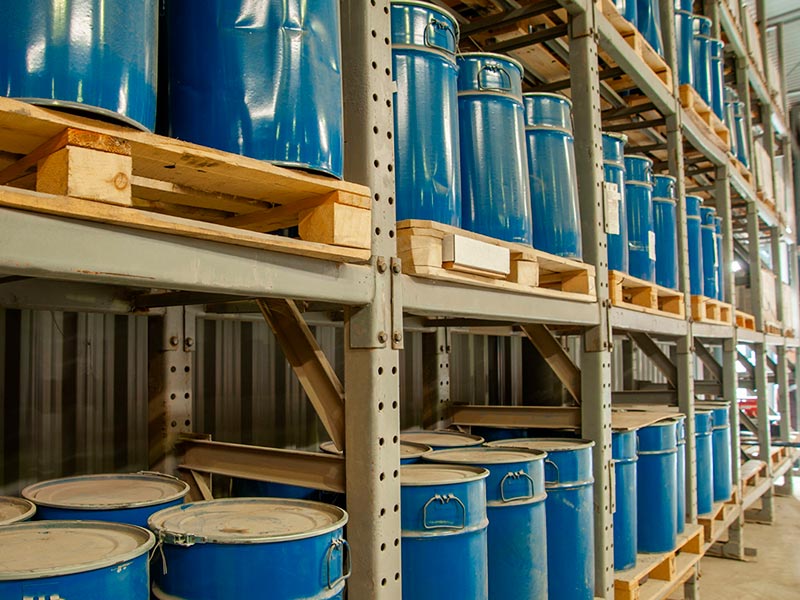
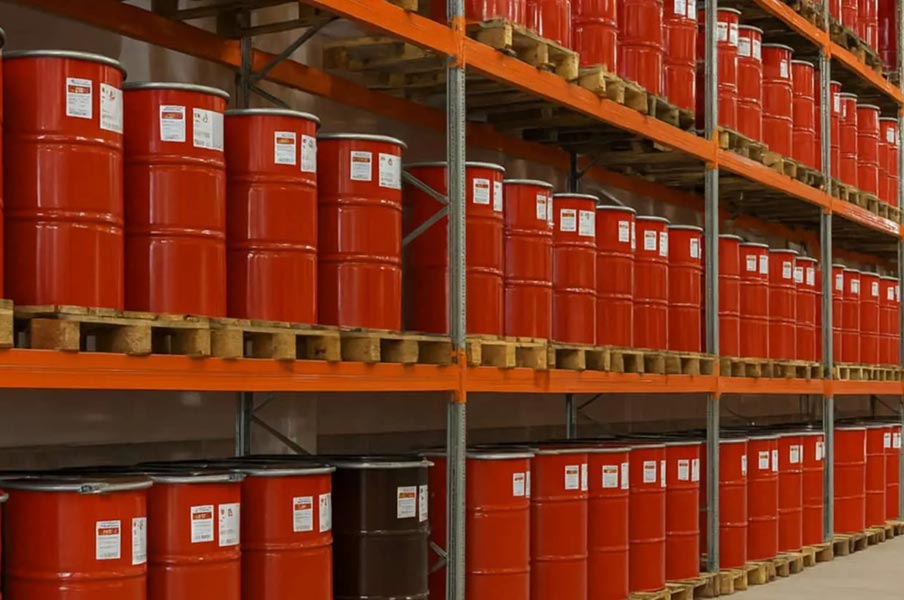
In the storage of chemicals in mobile containers, such as drums, canisters or IBCs, the APQ project is developed in accordance with the applicable ITC, taking into account the classification of the products and the actual storage and handling conditions.

In this type of installation, the APQ service typically includes:

  • Definition of the warehouse layout, optimising the distribution of containers.

  • Product compatibility analysis, ensuring correct separation between reactive or incompatible substances.

  • Installation of spill containment systems, such as bunds or trays.

  • Design or verification of ventilation systems suitable for the existing risk.

  • Adaptation of existing constructions to meet the requirements of the APQ Regulation.

  • Application of fire protection measures.

  • Identification and demarcation of classified areas, where applicable.
    At Grupo TICE, we assess each mobile container storage individually, ensuring that the measures taken are proportionate to the risk, operable, and fully compliant with the APQ Regulations.

Why is it recommended to hire a specialised engineering firm for chemical storage?

Chemical storage doesn't support generic solutions. Each facility has distinct products, variable quantities, and its own specific conditions which, if not analysed properly, can generate hidden risks or regulatory non-compliance.

At Grupo TICE, the difference lies in how we approach the problem: we analyse the installation as it actually works, not as it should work on paper. This allows us to detect incompatibilities between products, common segregation errors, or insufficient security measures before they become serious problems.

For many companies, having specialised engineering means avoiding improvisation, gaining legal certainty, and having the assurance that chemical storage is well resolved from both a technical and regulatory standpoint.

How much does it cost to adapt a chemical storage facility according to APQ Regulations?

There is no standard price for an APQ project, as the cost directly depends on the initial condition of the storage and the type of chemicals involved. Some facilities require very specific adjustments, while others need more extensive adaptation to comply with regulations.

At Grupo TICE, we don't work with fixed packages. First, we analyse the products, quantities, storage system, and existing measures, and from there we define which actions are truly necessary.

This method allows investment to be adjusted to what is strictly necessary, avoiding both surcharges and insufficient solutions that could generate problems in a future inspection.

How long can an APQ adaptation project in an industrial facility take?

The implementation period for an APQ project varies greatly depending on the scope of the adaptation. In some cases, reorganising storage and updating documentation is sufficient; in others, it is necessary to intervene on containment basins, ventilation, signage, or fire protection.

From Grupo TICE, the first step is always to define a realistic timeline, taking into account the company's activity. Whenever possible, we plan the work to ensure the chemical storage can continue to operate or that the intervention has the least possible impact on production.

Our aim is not just to meet deadlines, but for the solution to be well-executed, secure, and validated from day one.

Contact Us

Put on the Storing your Chemicals In the hands of specialists.

Contact our technical team and we will guide you to the most suitable solution.