Industrial Vibration Analysis

Vibration Analysis

We detect and correct vibration problems in industrial equipment to improve its reliability, safety, and performance.

At Grupo TICE, we analyse industrial machinery vibration problems from a comprehensive engineering perspective. We conduct measurements with accelerometers, study the dynamic behaviour of the equipment, identify the origin of the vibration and produce a precise technical diagnosis, then design and implement isolation and damping solutions to reduce the impact on the machine, the structure and the production process.

Vibration Analysis Experts in Machinery

At Grupo TICE, we help companies identify, assess, and correct vibration issues in industrial machinery. Our technical team analyses each case individually to locate the source of the vibration, assess its severity, and define the most appropriate solution based on the equipment, the structure, and the actual operating conditions.

We carry out vibration measurements, technical diagnostics, and the development of isolation and damping solutions.
What is Vibration Analysis?

Technical vibration measurement and diagnostics to prevent failures, reduce downtime, and protect industrial equipment

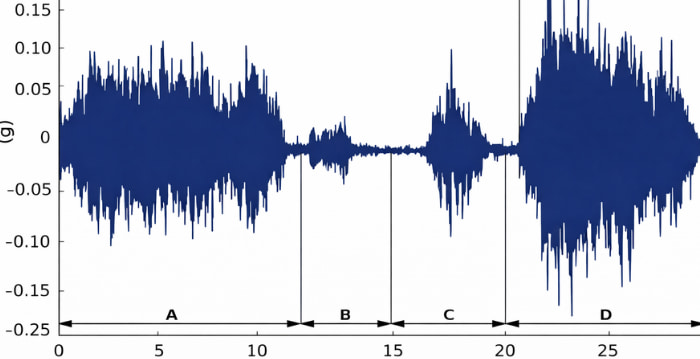
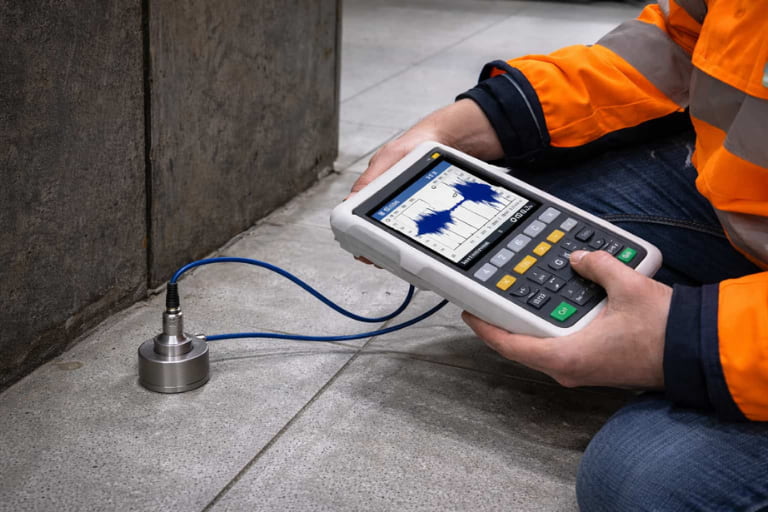
A vibration analysis is a technical study that allows for the evaluation of a machine's dynamic behaviour and the detection of anomalies before they develop into serious breakdowns. Through measurement equipment such as accelerometers and the analysis of the data obtained, it is possible to identify problems such as imbalances, misalignments, looseness, resonances, or bearing failures. This type of vibration study on industrial machinery helps in making technically-based decisions, optimising maintenance, and applying damping or isolation solutions when the problem also affects the structure or the production process.

At Grupo TICE, we undertake from the initial data capture, Analysis of results and comparison of regulations, design, and manufacture of shock absorbers, delivery of vibration analysis and installation of corrective measures if the project requires it.

Machinery susceptible of requiring Vibration Analysis and Solutions

Vibration incidents do not affect all machinery equally. Certain industrial equipment, especially that which operates with rotation, dynamic loads, or continuous running, is more prone to imbalances, misalignments, resonances, clearances, or structural transmissions.

At Grupo TICE, we carry out vibration analysis on machinery to detect these problems and install solutions that improve the reliability, safety, and performance of the facility.

Pumps, electric motors and rotary groups

These are machines highly prone to imbalances, misalignments, clearances, and bearing wear. A vibration analysis allows the source of the problem to be detected before it leads to a breakdown or an unplanned shutdown.

Data Processing Centres

Vibrations in a data processing centre can affect the performance and reliability of sensitive equipment, servers, air conditioning systems, and support structures. A vibration analysis allows the source of the problem to be detected in time, operational failures to be avoided, and the risk of incidents that compromise service continuity to be reduced.

Gear reducers, transmissions and gearboxes

The vibrations in these systems are usually related to defects in gears, alignment problems, or progressive mechanical deterioration. Their diagnosis is key to avoiding damage to the transmission and losses in the installation's performance.

Fans, compressors and air conditioning systems

This type of machinery can generate vibrations due to imbalance, resonance, or mechanical fatigue in rotating elements and supports. Analysing its behaviour helps to reduce noise, improve reliability, and prevent transmission to the structure.

Milling, mixing, and heavy process machinery

They work with high dynamic loads and demanding service conditions, making them particularly sensitive to severe vibrations and repetitive stresses. A technical study allows for the control of their impact on critical components and the extension of equipment service life.

Conveyor belts, screens, and material elevators

The vibration in these systems can be caused by mechanical imbalances, poor supports, or irregularities during continuous operation. Detecting it in time helps to prevent failures, loosenings, and problems with the overall stability of the assembly.

Lathes, milling machines and high-precision machining

On these machines, even small vibrations can directly affect the machining quality and process precision. Vibration analysis allows for the correction of instabilities that impact tolerances, finishes, and productivity.

Turbines and equipment subjected to high dynamic loads

These are equipment where any vibratory alteration can have a significant impact on safety, performance and maintenance. A technical diagnosis allows for the anticipation of failures and the definition of control measures adapted to the criticality of the installation.

Worktops, supports and structures that receive vibration

It's not always the machine that's the problem; in many cases, vibration is transmitted to the receiving element, compromising its stability or function. In these situations, it's essential to study structural transmission and design isolation or damping solutions.

Control the Vibration of your Machines with the Installation of Dampers

Benefits of Performing Industrial Vibration Analysis

The application of acoustic engineering solutions allows for the control of noise and vibrations, optimisation of equipment reliability, and ensures regulatory compliance. At Grupo TICE, we work with certified measurements and bespoke corrective measures to improve safety, efficiency, and production continuity.

Accurate Vibration Analysis

Vibration analysis provides real data on how a machine behaves during operation. This information is key to identifying the root cause of an issue, assessing its severity, and guiding a more technically precise solution.

Regulatory Compliance and Legal Risk Reduction.

The acoustic study provides a solid technical basis for evaluating conditions and justifying decisions based on the analysed environment. In some cases, RD 286/2006 may be relevant, especially in work environments, and in others, the framework of the CTE DB-HR, more linked to activity and construction, may be applicable.

Breakdown prevention and downtime reduction

Detecting imbalances, misalignments, clearances, resonances, or bearing failures before they develop helps to avoid unscheduled downtime. Acting in good time reduces the impact on production and minimises the cost of reactive maintenance.

Increase in the lifespan of equipment and mechanical components

Excessive vibration accelerates the wear of bearings, mounts, transmissions, couplings, and other critical components. Controlling this behaviour helps to extend the service life of machinery and improve its reliability in service.

Reduction of transmissions to supporting structures and receiving elements

It's not always the generating set itself that's affected by the problem; in many cases, vibration is transmitted to bases, supports, floors, or nearby machinery. Analysing this transmission allows for the implementation of tailored isolation and damping measures for the installation.

Comprehensive solution with measurement, diagnosis and implementation

At Grupo TICE, we tackle the problem with a complete 360º engineering perspective. We carry out the measurement, interpret the data, define the technical solution, and implement the necessary corrective measures.

Technical Experience and Guarantee in Industrial Acoustic Engineering

With over two decades of experience in industrial engineering, Grupo TICE Ingenieros regularly works with companies in sectors as diverse as automotive, manufacturing, food, pharmaceuticals, logistics, ceramics, and chemicals. This multi-sector experience allows us to understand the operational specificities of each industry and adapt the suitability of machinery to RD 1215/1997 to the real requirements of each production environment.

Our projects are characterised by their technical rigour, adaptability, and the delivery of certified solutions that fully comply with current regulations. Thanks to this combination of knowledge, methodology, and specialisation, we guarantee a safe, effective, and aligned fit with the requirements of any industrial sector.

Years of Experience
+ 0
Projects Completed
+ 0
Advised Companies
+ 0

Industrial Acoustic Engineering Projects Undertaken

Work Methodology for Vibration Analysis in Industrial Machinery

At Grupo TICE, we apply an engineering methodology focused on identifying the origin of vibrations, assessing their real impact on machinery, and designing effective solutions to correct them. We combine technical measurement, specialised analysis, and the application of damping systems adapted to each installation to improve equipment reliability, safety, and performance.

Initial data capture

We study the characteristics of the installation, activity, or building to identify the origin of the problem, the emission sources, and the potential transmission paths of noise and vibrations. This phase allows us to define the technical scope of the work and propose an action strategy tailored to each case.

1
Analysis of results and comparison with regulations

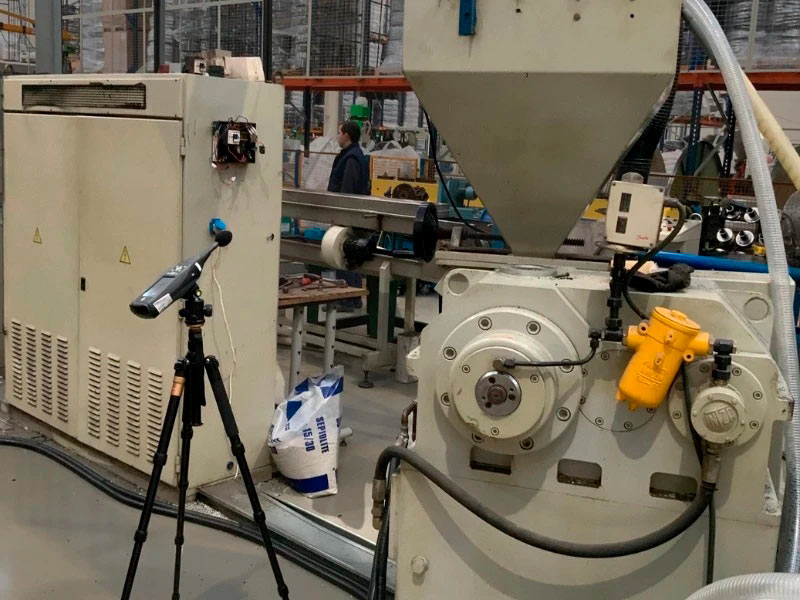
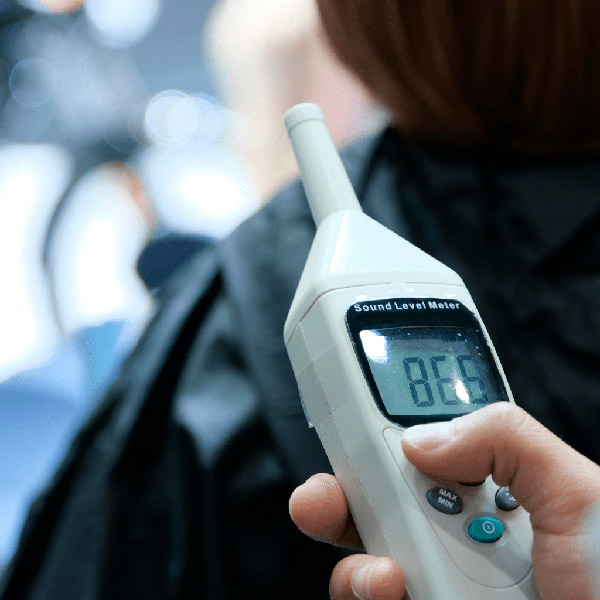
We carry out on-site measurements using calibrated equipment, such as sound level meters and accelerometers, to obtain real-world data on existing noise and vibration levels. This information is crucial for accurately assessing and comparing the situation, as well as the affected regulations, to provide an objective basis for our work.

2
Corrective Measures Design.

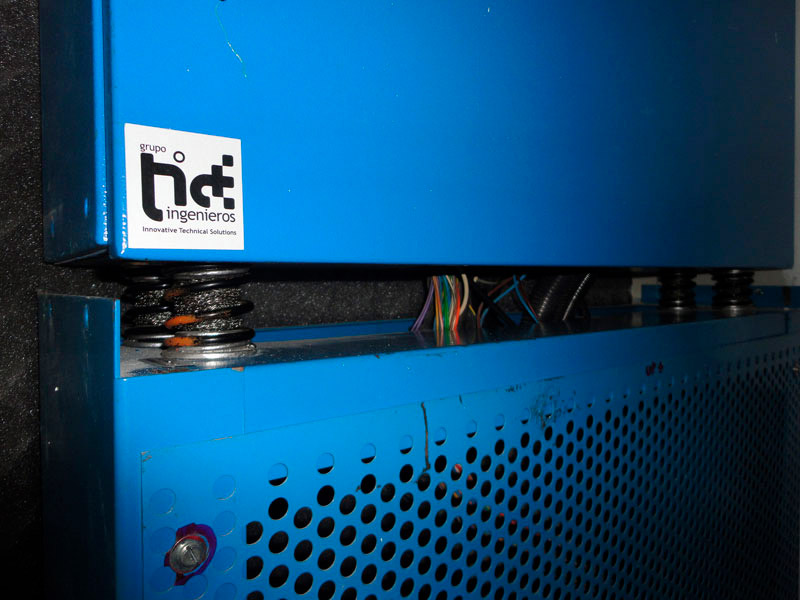
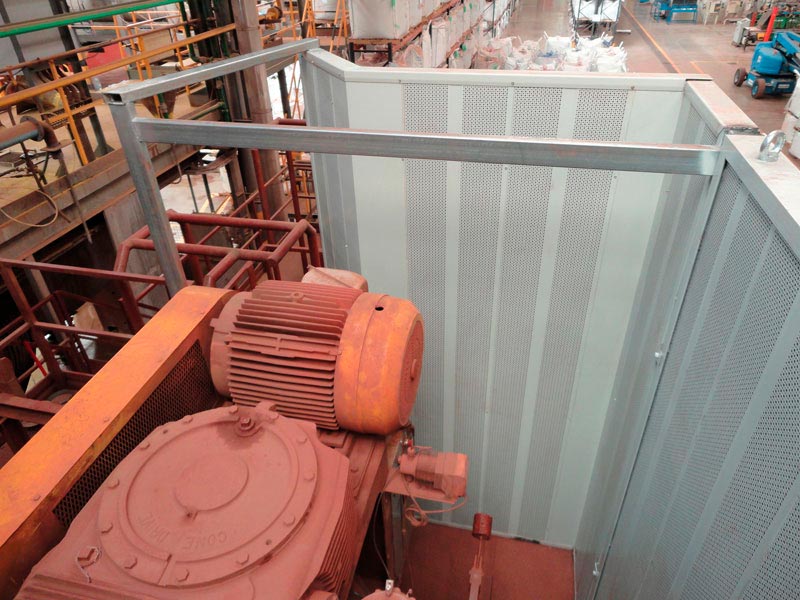
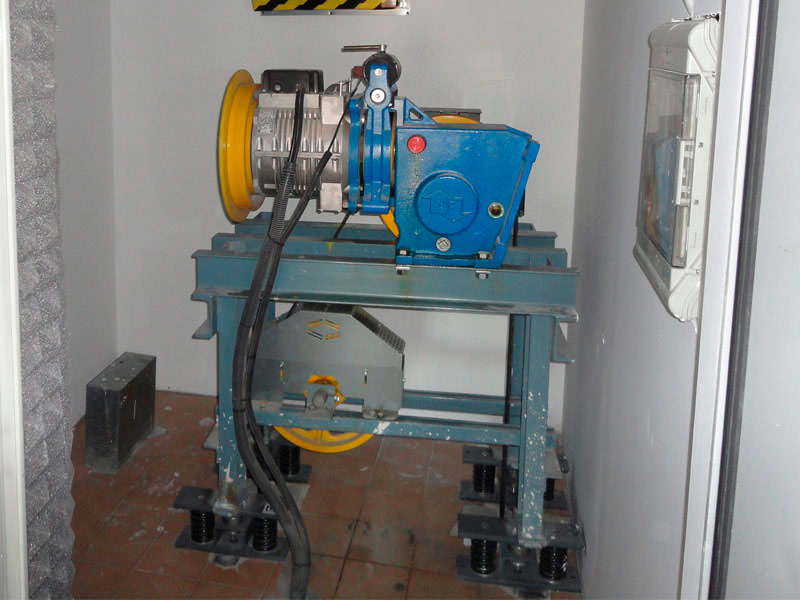
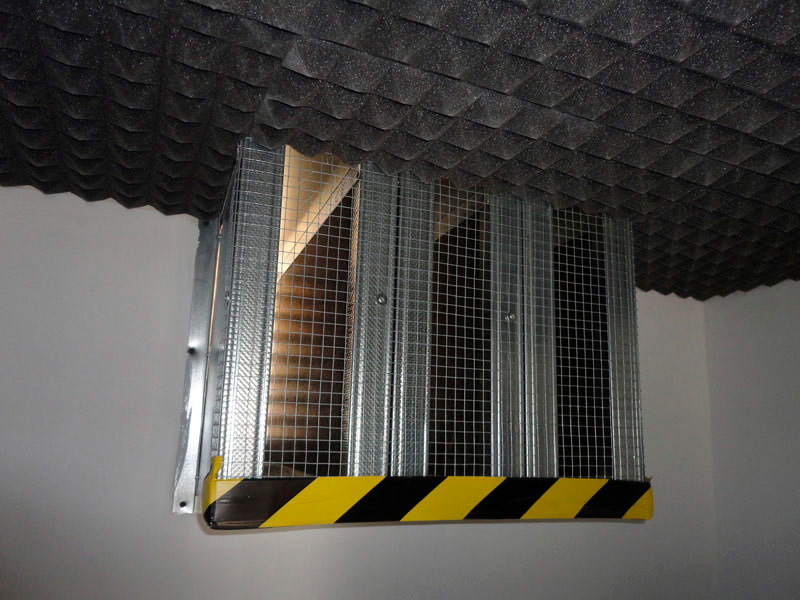
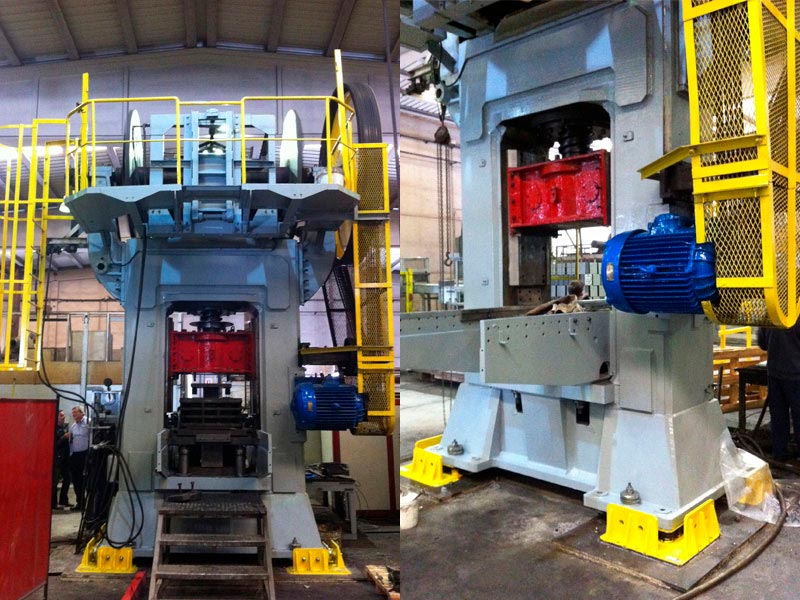
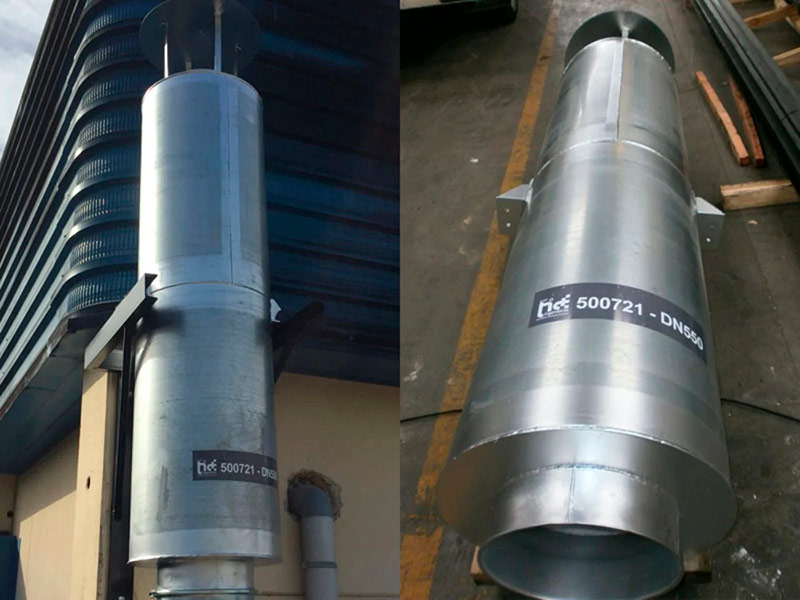
We develop specific solutions such as acoustic enclosures, cabins, partitions, absorbent barriers, pipe insulation, and even special dampers for heavy loads. Each measure is custom-designed according to the machinery, the production environment, and the required attenuation level.

4
Vibration Analysis Delivery

We deliver the complete acoustic study, including the technical analysis of the measurements, problem identification, and definition of recommended corrective measures. As part of the process, we present the client with a prototype design of the proposed solution for their prior review and validation.

5
Installation measures if the project requires it

If the project requires it, we will install the necessary corrective measures to reduce the detected noise and vibrations. Prior to this, we will provide the client with a detailed quote for the proposed solution for their review and approval, ensuring that the work is tailored to the installation's needs.

5

Does your installation transmit vibrations to nearby structures or equipment?

Frequently Asked Questions About Our Industrial Acoustic Survey Service

What is vibration analysis?

It is a technical study that assesses how a machine behaves during its operation to detect anomalies before they evolve into breakdowns, stoppages, or performance losses. From the measurement and analysis of data, problems such as imbalances, misalignments, clearances, resonances, or bearing failures can be identified.

When should vibration measurements be taken on machinery?

It is beneficial when the machine exhibits anomalous vibrations, mechanical noise, loose components, repetitive wear, bearing failures, or unplanned shutdowns. It is also advisable when you want to validate the condition of critical equipment or make maintenance decisions based on objective data.

What exactly does a vibration measurement measure?

Vibration measurement allows the dynamic behaviour of a machine to be recorded using sensors, typically at points such as supports, housing, or areas near bearings. The ISO guidelines for vibration evaluation of machinery establish measurement and evaluation criteria for both operational monitoring and technical acceptance.

Análisis de vibraciones puede detectar fallos como desequilibrios, desalineaciones, holguras, fallos en rodamientos, fallos en engranajes, resonancia, problemas de lubricación y fallos en la cimentación.

This service can help detect imbalances, misalignments, gear defects, mechanical clearances, resonances, bearing degradation, and vibrational transmission problems to the structure. This is why vibration analysis is used as a key diagnostic tool in industrial machinery.

What is the difference between an active machine and a passive machine or structure?

Active machines are those that generate vibration through their own operation, such as pumps, motors, fans, or compressors. Passive or receptor elements are supports, bases, floors, pipes, structures, or nearby equipment that receive and transmit this energy, meaning the problem is not always solely in the source, but also in how it propagates. This is particularly relevant when designing vibration isolation solutions.

Does vibration analysis work for HVAC systems?

Lorem ipsum

Yes. HVAC systems can require vibration analysis and isolation because equipment such as air handling units, fans, chillers, rooftop units, ductwork, or piping can transmit vibration and noise to the building structure. In these cases, solutions such as anti-vibration mounts, springs, elastomeric supports, or specific hangers are typically employed.

What are the benefits of vibration isolation?

Lorem ipsum

Vibration isolation helps to reduce the energy transferred from the machine to the structure, thereby decreasing discomfort, structural noise, mechanical fatigue, and the risk of deterioration in equipment or supports. Furthermore, it can improve system stability and promote more reliable operation in industrial and HVAC installations.

Which teams tend to require this service most frequently?

Lorem ipsum

They are particularly required by pumps, motors, fans, compressors, gearboxes, transmissions, belts, HVAC equipment, and other rotating or continuously operating machinery. These are typologies where vibration assessment is especially useful for anticipating failures and deciding on corrective measures.

Does Grupo TICE also implement the solution?

Lorem ipsum

Yes. That's one of our main differentiators. At Grupo TICE, we work with a vision of 360 engineering, so we are not limited to vibration analysis: we analyse the problem, design the most suitable solution and also carry out the implementation of corrective measures.

This allows for a single technical point of contact throughout the entire process, from initial analysis to final execution, improving project coordination and ensuring that the solution truly aligns with the root of the problem and the needs of the environment.