
Battery Room

Design and Installation of Battery Charging Rooms for Electric Forklifts

Safe, Efficient Traction Battery Rooms Compliant with Current Regulations.

Battery Charging Hall Experts

At Grupo TICE, we specialise in the design and installation of battery rooms for electric forklifts, guaranteeing safe, efficient spaces that are fully adapted to current regulatory requirements. With our experience in industrial engineering and warehouse safety, we develop solutions that control the risks associated with charging traction batteries and ensure smooth, reliable operation.

Our approach combines technical analysis, electrical engineering, industrial ventilation, and occupational risk prevention criteria, enabling us to create optimised and fully documented rooms that will successfully pass any audit or inspection. As specialised engineers, we accompany the client from the initial study through to commissioning, ensuring a professional result that is fully aligned with the real needs of their operation.
What is a Battery Charging Room?

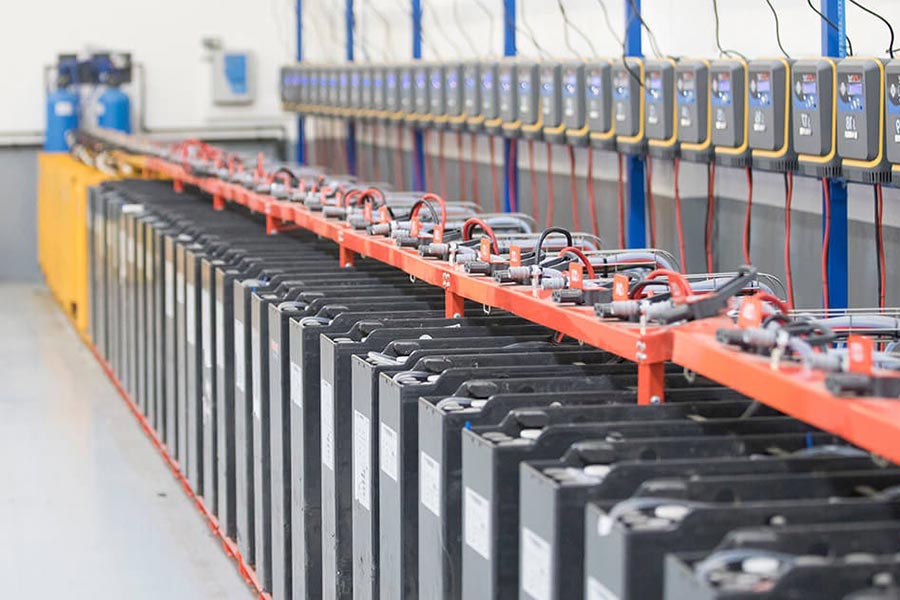
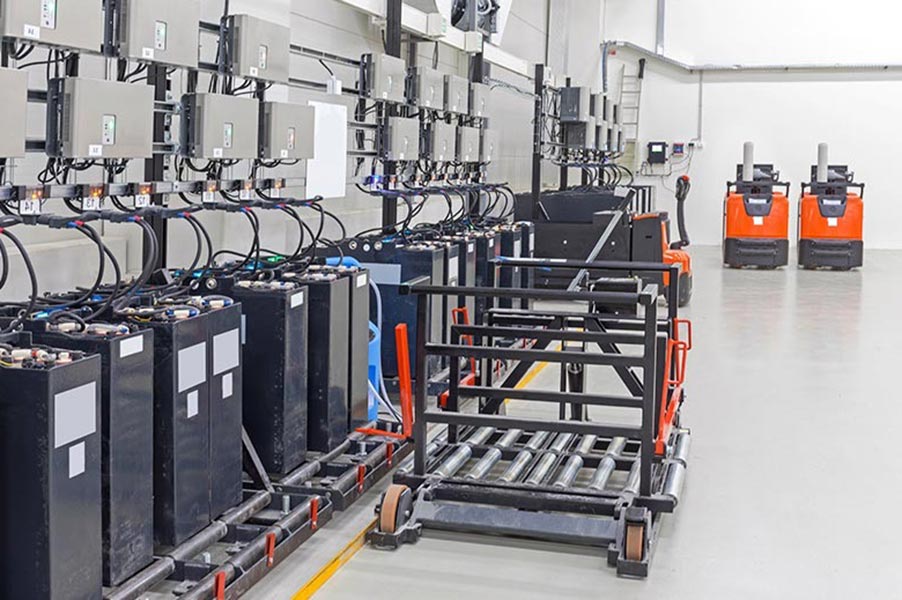
A battery room is a space specifically designed for charging, handling, and maintaining traction batteries used in electric forklifts and materials handling equipment. Its design is not arbitrary: it must integrate electrical protection, adequate ventilation, and measures that guarantee the safety of both personnel and the facility.

A correctly implemented room incorporates protected electrical installations, ventilation and extraction systems capable of preventing hydrogen accumulation, and solutions that mitigate risks associated with fires, spills, or electrical contact. These elements not only reduce hazards inherent in the charging process but also allow for ordered, efficient, and continuous operation.

In industrial and logistics environments, where the availability of electric fleets is critical, a well-designed battery room improves equipment lifespan, optimises daily operations, and ensures compliance with industrial safety and occupational hazard prevention requirements. At Grupo TICE, we apply engineering criteria to make each room safe, functional, and perfectly adapted to the real needs of the warehouse.

Why choose Grupo TICE for the Design and Installation of Battery Rooms

Designing a battery room requires technical knowledge, up-to-date regulations, and a comprehensive approach to ensure safe and efficient implementation. At Grupo TICE, we combine engineering, experience in electrical projects, and industrial safety criteria to offer completely reliable and well-documented solutions.

Expert Engineering

Our team has extensive experience in electrical engineering and industrial safety, enabling us to design robust, appropriately sized battery rooms that are tailored to the actual use of electric forklifts in logistics and industrial environments.

Normative Knowledge

We rigorously apply the requirements of OSH, industrial ventilation, low voltage electrical installations (REBT), and ATEX requirements where applicable. This ensures that each room complies with current regulations and offers a safe, controlled, and fully verifiable charging environment.

Comprehensive Service

We cover the entire project: technical design, installation, regulatory documentation and training for the responsible staff. This approach ensures the room is correctly implemented from day one and prepared to pass audits and inspections.

Technical Advice

We offer clear and practical guidance to warehouse managers and Health & Safety departments, facilitating understanding of operational requirements and the safety measures needed to work with batteries with complete reliability.

You need to Design or Adapt a Battery Charging Room in your Warehouse.

Who is the Battery Room Design and Installation Service for Electric Forklifts aimed at?

The battery room design and installation service is aimed at companies operating with electric forklifts or materials handling equipment powered by traction batteries. These environments require safe, efficient, and compliant charging spaces. At Grupo TICE, we develop solutions adapted to different industrial and logistical sectors, guaranteeing reliable operation and smooth workflows.

Logistics Centres and 3PL Operators.

High-traffic facilities that require an optimised charging room to ensure continuous forklift rotation and prevent risks associated with hydrogen build-up and intensive battery usage.

Food Industry and Retail.

Companies where hygiene, operational continuity and regulatory compliance are priorities. A suitable battery room ensures controlled charging processes that are compatible with environmental requirements.

Manufacturing and Automotive.

Industrial plants that work with electric fleets across multiple production lines and require secure, ventilated, and correctly sized charging rooms to sustain a high working pace.

Companies Migrating to Electric Fleets.

Organisations that are replacing thermal equipment with electric forklifts and need to design a compliant battery room from scratch, ensuring a safe and efficient transition.

Warehouses with Intensive Forklift Use.

Environments where equipment availability is critical. A well-planned charging room allows for improved operations, reduced downtime, and prevention of incidents arising from inadequate charging.

Benefits of Installing a Battery Room Designed by TICE Group

The ISM365 service follows a structured process that allows for the evaluation, verification, and certification of the actual status of each machine's safety systems. Our methodology guarantees a complete, traceable analysis focused on maintaining compliance with RD 1215/1997 throughout the year.

Full Regulatory Compliance.

We ensure that the room complies with all H&S, ventilation, ATEX, and REBT requirements, providing a safe, documented installation prepared to pass inspections or audits without incident.

Greater Security and Risk Reduction.

The technical design of a battery room controls hydrogen generation, prevents dangerous electrical contact, and minimises potential ignition sources. This significantly reduces the risk of fires or explosions and enhances the protection of people and facilities.

Extending Battery Lifespan.

Proper ventilation, thermal control, and correct planning of charging points help to preserve batteries better, avoiding overheating and extending their long-term operational performance.

More Efficient and Organised Workflow.

A well-planned battery room improves daily operations, facilitates equipment rotation, streamlines the charging process, and prevents disruptions, allowing the electric fleet to operate with greater regularity and availability.

Professional Image with External Bodies.

Technical documentation, plans, signage and regulatory compliance reinforce the image of the company as safe and responsible, favouring positive audits and meeting the requirements of insurers and inspection bodies.

Regulatory Requirements for Battery Charging Rooms

The design of a battery room must adhere to a set of regulations and technical requirements intended to ensure a safe environment during the charging, handling, and maintenance of batteries. At Grupo TICE, we apply an engineering approach that integrates all these criteria to offer fully compliant, documented solutions adapted to the warehouse's operating environment.

Health and Safety Regulations and Industrial Safety.

We guarantee that the room meets the requirements demanded in occupational risk prevention and industrial safety, applying measures that reduce electrical, chemical and operational risks during the loading and handling of traction batteries.

NTP 617 Criteria from INSST for Lead-Acid Batteries.

We apply the recommendations of NTP 617, which establish specific measures to control risks associated with gases, heat, and electrolyte, ensuring safe conditions for charging lead-acid batteries in industrial environments.

Ventilation and Extraction Requirements.

We design ventilation systems capable of preventing the build-up of hydrogen generated during charging. This atmospheric control is essential to prevent dangerous atmospheres and ensure proper air renewal in the room.

Applicable Electrical Regulations (REBT).

We integrate electrical solutions that comply with the Low Voltage Electrotechnical Regulation, ensuring adequate protection, correct sizing, independent circuits, and a system free from risks of electric shock or overheating.

ATEX requirements when there is a risk of explosive atmosphere.

We assess the potential risk of hydrogen accumulation and apply ATEX criteria where appropriate. This includes selecting suitable equipment, correct zone classification, and preventative measures to eliminate ignition sources.

Technical Experience and Warranty in Battery Charging Rooms

At Grupo TICE, we have accumulated a solid 20-year track record in developing battery rooms for electric forklifts, which are safe and fully adapted to the operational needs of modern warehouses. Our team combines electrical engineering, industrial ventilation, and safety criteria to design reliable spaces that comply with regulations and are prepared to withstand the intensive use of electric fleets.

We work with tried and tested methodologies, evaluating each installation from a technical and preventative approach to ensure a robust, well-sized design geared towards operational continuity. This is complemented by comprehensive and clear documentation, which facilitates audits, OHS reviews, and certification processes.

The trust of our clients attests to our ability to create durable, efficient solutions that are fully integrated into the day-to-day running of the warehouse.

Years of Experience
+ 0
Projects Completed
+ 0
Advised Companies
+ 0

Work Methodology in the Design and Installation of Battery Rooms

Before commencing any project, at Grupo TICE we follow a structured methodology that ensures the battery room is designed and installed with robust technical criteria, complying with regulations and adapting to the operational pace of the warehouse. This process allows us to offer reliable, documented solutions that are fully aligned with each client's real needs.

Preliminary Study.

We analysed the fleet, the number of batteries and their charging powers, reviewed the available spaces on board the vessel, and assessed the daily operations and work shifts to define a battery room adapted to the warehouse's actual functioning.

1
Room Design.

We select the optimal location and plan the distribution of chargers, charging bays and aisles, as well as correctly designing the parking and manoeuvring areas to ensure smooth, safe operation that is adapted to the daily use of the warehouse.

2
Ventilation and Safety Engineering.

We calculate the necessary flow rate to maintain safe hydrogen levels and design mechanical or natural extraction as appropriate. Furthermore, we select containment elements, PPE, and signage to ensure a safe and fully controlled charging environment.

3
Electrical Engineering and ATEX.

We dimension electrical lines and protection panels, define sectionalising systems and differential protections, and carry out ATEX analysis and classification where applicable, ensuring a safe, compliant, and risk-appropriate installation.

4
Installation and Assembly.

We carried out the electrical installation, ventilation, and necessary supports, marked the loading zones, and applied the relevant signage. Finally, we performed functional tests and final adjustments to ensure the room is fully operational and safe.

5
Documentation and Training.

We delivered the final drawings, the technical design report, and the safe use instructions, complementing them with basic training for the client's staff to ensure correct operation and a clear understanding of the measures implemented in the room.

6

At Grupo TICE, we develop Safe, Efficient, and fully Certified Rooms.

Frequently Asked Questions about Our Drum Room Design and Installation Service

Is it compulsory to have a battery room for charging electric forklifts?

It is not always mandatory, but it is highly necessary when battery charging generates risks that must be specifically controlled. Industrial safety and occupational risk prevention regulations require the charging process to be carried out in an environment that guarantees adequate ventilation, gas control, electrical protection, and safe handling of equipment.

In practice, this means that many companies require a conditioned battery room, as charging in makeshift spaces can lead to dangerous concentrations of hydrogen, overheating, or risky situations that compromise both the installation and the operators.

At Grupo TICE, we analyse each case to determine if the activity requires a separate room and design a space that meets all technical and regulatory requirements, ensuring a fully secure charging environment adapted to the warehouse's workflow.

What are the risks of charging batteries outside of an air-conditioned room?

Charging batteries in unprepared areas can create a number of risks that are easily overlooked but can affect warehouse safety and fleet performance. During charging, batteries release gases and heat which, without adequate ventilation, can accumulate in the atmosphere and alter the normal conditions of the space.

Furthermore, in areas with no specific control, it is common to find exposed cables, poorly placed chargers, or tampered-with batteries without the necessary protection, increasing the likelihood of electrical contact, electrolyte spills, or equipment damage. These makeshift environments also hinder signage, order, and supervision, thereby increasing the possibility of operational incidents.

At Grupo TICE, we recommend having a correctly designed space to avoid these risks and ensure a safe, stable, and compatible charging process with the daily activity of the warehouse.

Can an existing space be adapted to convert it into a drum room?

In most warehouses, it is possible to set up an existing area to convert it into a battery room, provided that the space allows for the integration of the necessary technical elements to guarantee safe and organised charging. This solution is common when a company wants to optimise usable space without building a dedicated enclosure from scratch.

Before proposing the adaptation, it is necessary to check if the space allows for effective ventilation, an adequate electrical installation, and a layout that facilitates battery handling without interfering with the operational environment. It must also be verified that the chosen location does not create additional risks, such as heat accumulation or exposure to ignition sources.

When these conditions can be guaranteed, the adequacy of space becomes a practical and efficient alternative for implementing a fully functional charging room.

How often should a battery room be inspected to ensure it is safe?

At Grupo TICE, we do not establish a single interval for all companies, as the need for review depends on the actual use of the fleet, the battery types, and the operational pace of the warehouse. What we do is determine, during the design or installation phase, the most suitable frequency of control for each client.

The reviews aim to verify that the ventilation maintains its performance, that the chargers function without deviation, and that the space conditions have not changed from the initial design. Changes in shifts, fleet increases, or new work routines may require an early review.

Our approach involves supporting the client in the post-implementation phase, so that the room maintains its safety levels over time and continues to operate under the same technical guarantees with which it was designed.

What signs indicate that a battery room needs refurbishment or redesign?

In our experience, a battery room starts showing clear signs when it's no longer suitable for the actual usage conditions of the warehouse. Sometimes the warning is obvious, such as an increase in temperature or insufficient ventilation, and other times it appears more subtly, for example when the fleet grows and the space no longer allows for orderly and safe operation.

It is also common to detect the need for redesign when chargers accumulate without adequate distribution, when battery rotation becomes slow, or when exposed cables, damaged signage, or charging areas that no longer comply with the initially planned safety distances are observed.

At Grupo TICE, we usually recommend a review when these signs repeat, as they often indicate that the room has become outdated with respect to current operations. An adaptation or redesign allows for the recovery of safety, improvement of workflows, and adaptation of the installation to new technical or regulatory requirements.

Why hire a specialist engineering firm to design an industrial battery room?

When a company approaches us to design their battery room, they're not just looking to comply with regulations; they're looking for peace of mind, knowing that the installation will function safely and without unforeseen issues. Our accumulated experience in industrial projects allows us to anticipate common problems, such as poorly planned layouts, inadequate ventilation, or incorrectly sized chargers, before they arise.

Another advantage is that we work with engineering criteria from the initial planning right through to commissioning, which ensures that every decision is based on calculations, regulations, and real-world operations, rather than improvised solutions. This reduces risks, speeds up implementation, and avoids subsequent modifications.

Furthermore, we support the client throughout the design and decision-making process, ensuring that the room is integrated without affecting the warehouse's operation. For many companies, this combined technical and practical vision is precisely what makes the difference and allows them to have a reliable installation from day one.

What is the approximate cost of designing and installing an industrial battery room?

The cost of a battery storage room cannot be fixed generically, as it depends directly on several factors. Each project requires an analysis of whether the installation needs mechanical ventilation, ATEX classification, a complete electrical redesign, or minimal adaptation to operate safely.

At Grupo TICE, we conduct a personalised assessment because we understand that not all companies have the same needs or the same technical constraints. After studying the warehouse operations and the state of the premises, we define a detailed proposal that reflects only the necessary solutions to ensure the room functions reliably.

This approach allows for a streamlined and consistent budget, avoiding unnecessary investment and ensuring the installation complies with regulations and provides the safety required for a professional loading zone.

How long does a full charging room project take to complete?

The duration of a battery room project varies depending on the complexity of the installation, the condition of the available space, and the number of elements that need to be integrated (ventilation, electrical protection, signalling, ATEX, etc.). In some cases, the work is carried out very quickly, while in others, it is necessary to coordinate several technical phases to ensure that the room is perfectly equipped.

At Grupo TICE, we analyse each project from the outset to determine a realistic timeframe adapted to the company's operations, avoiding unnecessary interruptions in the warehouse. Our aim is for the client to have a functional and safe room in the shortest possible time, without compromising on quality, regulatory compliance, or technical reliability.

Contact Us

Put your Battery Room In the hands of specialists.

Contact our technical team and we will guide you to the most suitable solution.