Una empresa recibe una máquina fabricada en China. En la placa aparece el símbolo CE, pero la declaración de conformidad es genérica, el manual está mal traducido y algunos datos no coinciden con el equipo entregado. ¿Puede ponerse en funcionamiento con seguridad y con respaldo documental?
La respuesta no puede obtenerse mirando únicamente el logotipo. La separación entre las letras puede ser una primera señal de alerta, pero la validez del marcado CE depende de la conformidad real de la máquina, de la documentación que la respalda y de las obligaciones que correspondan al fabricante y al importador.
Respuesta rápida. El denominado “China Export” no es una marca oficial de conformidad reconocida por la Unión Europea. La expresión se utiliza popularmente para describir símbolos parecidos al marcado CE, reproducciones incorrectas o usos potencialmente engañosos. Unas letras demasiado juntas pueden alertarnos, pero solo la revisión conjunta de la máquina, la declaración de conformidad y la documentación técnica permite valorar si el marcado está correctamente respaldado.
¿Existe realmente el Marcado CE China Export?
Durante años se ha difundido que existen dos símbolos distintos: el CE europeo, asociado a la conformidad con la legislación de la Unión Europea, y otro aparentemente similar que significaría “China Export”. Esta explicación resulta sencilla y se ha popularizado en internet, pero no refleja con precisión la posición de las instituciones europeas.
En una respuesta de la Comisión Europea al Parlamento Europeo, la Comisión indicó que no tenía constancia de la existencia de una marca oficial denominada “China Export”. Por ello, es más correcto hablar de un marcado CE incorrectamente reproducido, aplicado sin respaldo suficiente o susceptible de inducir a error.
Esto no significa que el problema sea menor. La legislación europea prohíbe colocar marcas, signos o inscripciones que puedan inducir a error sobre el significado o el grafismo del marcado CE. Sin embargo, atribuir automáticamente cualquier logotipo deformado a una supuesta marca oficial china puede llevar a conclusiones equivocadas.
¿Puede una máquina fabricada en China tener un Marcado CE Válido?
Sí. El país de fabricación no determina la validez del marcado. Una máquina producida en China, Estados Unidos o cualquier otro país puede comercializarse en la Unión Europea si cumple la legislación que le resulte aplicable y se ha seguido correctamente el procedimiento de evaluación de la conformidad.
Según el portal oficial de la Unión Europea sobre marcado CE, el marcado indica que el fabricante declara que el producto cumple los requisitos europeos aplicables. No es una marca de calidad, una homologación general ni una garantía comercial sobre el rendimiento del equipo.
En maquinaria industrial, el símbolo debe ser la consecuencia visible de un proceso técnico. Este proceso exige identificar la legislación aplicable, evaluar los riesgos, diseñar o verificar las medidas de seguridad, elaborar la documentación técnica necesaria y emitir la correspondiente declaración de conformidad.
Tampoco es correcto asumir que todas las máquinas necesitan un certificado emitido por una entidad externa. La intervención de un organismo notificado solo es obligatoria cuando así lo establece el procedimiento aplicable al producto. En otros casos, la legislación permite que el fabricante realice la evaluación de conformidad bajo su propia responsabilidad.
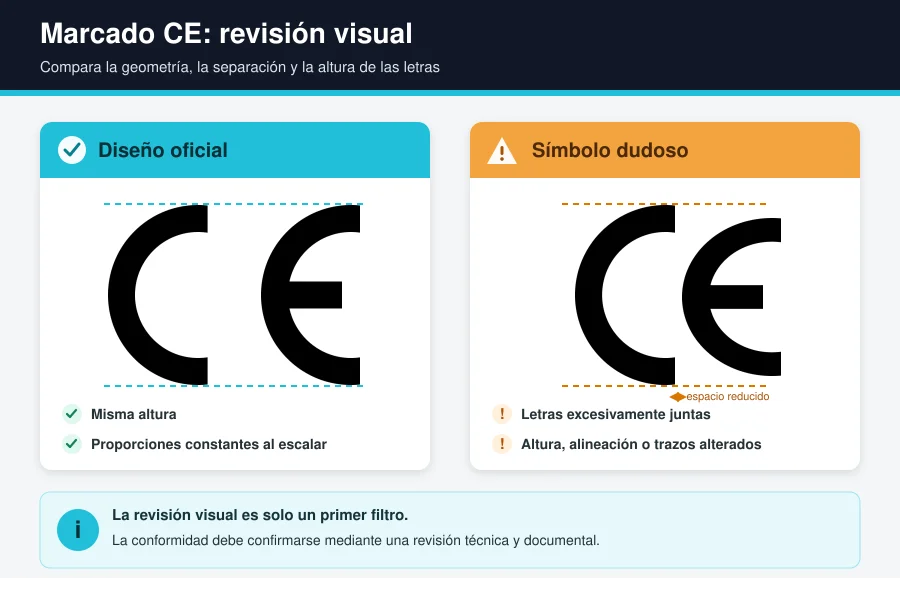
Diferencias visuales entre el marcado CE oficial y una símbolo dudoso
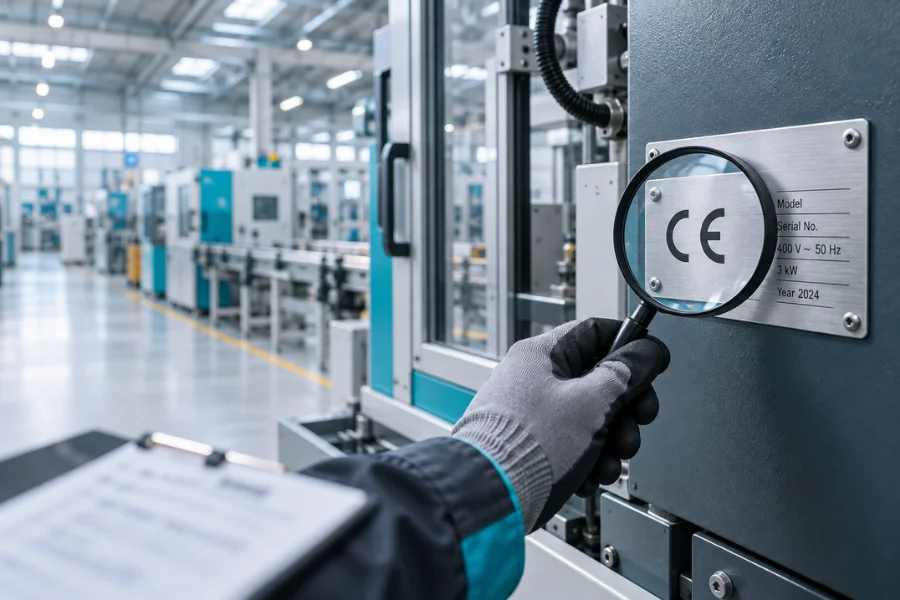
La revisión visual es útil como primer filtro. El diseño oficial mantiene unas proporciones definidas entre la C y la E; ambas letras deben tener la misma altura y conservar su geometría cuando el símbolo se amplía o reduce. Con carácter general, el marcado debe ser visible, legible e indeleble y respetar una altura mínima de 5 mm, salvo que la legislación específica establezca otra cosa.
Pueden generar dudas unas letras excesivamente juntas, deformadas, desalineadas o con trazos que no respetan el diseño oficial. También debe revisarse dónde aparece el símbolo y si está integrado de forma coherente en la placa de características de la máquinaNo obstante, un logotipo perfectamente dibujado puede haberse colocado sin que exista una evaluación válida. Del mismo modo, una irregularidad gráfica no permite concluir por sí sola que todo el equipo incumple. La comprobación visual debe conducir a una revisión técnica y documental, no sustituirla.
¿Por qué no basta con mirar el logotipo?
El marcado CE funciona como una declaración del fabricante, pero necesita estar respaldado por evidencias. Si la documentación no identifica la máquina recibida o no refleja su configuración real, el símbolo pierde valor como indicador de un proceso de conformidad correctamente ejecutado.
Algunas señales de alerta habituales son:
- El fabricante indicado en la declaración no coincide con el de la placa.
- El modelo, el número de serie o el año de fabricación no están identificados o son diferentes.
- Se utiliza una declaración genérica para varias máquinas sin concretar cuál cubre.
- La legislación citada no corresponde al equipo o está desactualizada.
- Las normas armonizadas enumeradas no guardan relación con los riesgos de la máquina.
- El documento carece de firma, fecha o identificación suficiente de la persona que lo suscribe.
- El manual es incompleto, está mal traducido o no incluye la información necesaria en castellano.
- Faltan instrucciones sobre instalación, ajuste, mantenimiento y riesgos residuales.
- La máquina ha sido modificada después de su fabricación sin reevaluar los riesgos.
Documentación que debe revisarse al importar maquinaria de China
Antes de comprar, aceptar o poner en servicio una máquina importada conviene comprobar que existe coherencia entre el equipo físico y todos sus documentos. La revisión debe adaptarse al tipo de máquina y a la legislación aplicable, pero normalmente incluirá los siguientes elementos.
Declaración de Conformidad
Debe identificar claramente al fabricante, la máquina, el modelo y, cuando proceda, el número de serie. También debe recoger la legislación aplicada, la persona autorizada para firmar y los demás contenidos exigidos. Una hoja titulada “CE Certificate” no sustituye automáticamente a la declaración de conformidad ni acredita, por sí sola, que se haya completado el procedimiento correcto.
Manual de Instrucciones
El manual debe corresponder a la configuración real del equipo y proporcionar la información necesaria para transportarlo, instalarlo, utilizarlo, ajustarlo, mantenerlos y retirarlo del servicio de forma segura. Para su uso en España, la información destinada al usuario debe facilitarse en castellano en los términos establecidos por la normativa aplicable.
Placa e identificación de la máquina
Los datos de la placa deben coincidir con la declaración y el manual. Deben revisarse, entre otros aspectos, el fabricante, la denominación de la máquina, el modelo, el número de serie, el año de fabricación y las características técnicas relevantes.
Documentación y evidencias técnicas
Según el equipo, puede ser necesario revisar la evaluación de riesgos, esquemas eléctricos, neumáticos o hidráulicos, planos, cálculos, normas empleadas, informes de ensayo y documentación de los componentes de seguridad. Parte del expediente técnico puede permanecer bajo custodia del fabricante y no entregarse íntegramente al comprador, pero debe existir y poder ponerse a disposición de la autoridad competente cuando corresponda.
Lista de comprobación antes de comprar o poner en servicio la máquina
| Comprobación | Situación esperada | Señal de alerta | Acción recomendada |
|---|---|---|---|
| Antes de comprar | Documentación vinculada a la oferta y al modelo exacto. | Documentos genéricos o enviados solo como muestra. | Condicionar la compra a la entrega y validación documental. |
| Fabricante | Razón social y dirección claramente identificadas. | Datos incompletos, inconsistentes o no verificables. | Solicitar aclaraciones y comprobar quién asume la conformidad. |
| Declaración | Identifica la máquina, el modelo, la legislación, la firma y la fecha. | “CE Certificate” sin correspondencia con el equipo. | Revisar su contenido y el procedimiento aplicable. |
| Manual | Completo, coherente con el equipo y disponible en castellano. | Traducción deficiente o ausencia de información de seguridad. | Solicitar una versión correcta antes de la puesta en servicio. |
| Recepción | La placa, los documentos y la máquina coinciden. | El modelo, el número de serie o la configuración son diferentes. | Dejar constancia y no aceptar el equipo sin resolver la discrepancia. |
| Seguridad | Protecciones y funciones de seguridad adecuadas al riesgo. | Accesos peligrosos, resguardos insuficientes o dispositivos anulables. | Realizar una evaluación técnica y definir las medidas necesarias. |
| Puesta en marcha | Instalación, integración y uso previstos evaluados. | Cambios respecto al diseño o interacción con otras máquinas. | Evaluar el conjunto y documentar las modificaciones. |
Qué responsabilidades tiene la empresa importadora
Cuando una empresa introduce en la Unión Europea una máquina procedente de un tercer país, no debería tratar la documentación del proveedor como una mera formalidad. Debe determinar qué papel desempeña en la cadena de suministro y qué obligaciones le corresponden conforme a la legislación aplicable.
Entre las comprobaciones esenciales se encuentran verificar que el fabricante ha realizado el procedimiento de evaluación exigible, que la máquina lleva el marcado y las identificaciones requeridas, que la documentación acompaña al equipo y que no existen motivos para pensar que el producto es no conforme. Las obligaciones concretas deben analizarse para cada caso.
Si la empresa comercializa la máquina con su propio nombre o marca, la modifica de forma sustancial o asume funciones que la normativa atribuye al fabricante, sus responsabilidades pueden cambiar. Por ello, cualquier modificación, integración en una línea o cambio relevante de uso debe revisarse antes de la puesta en marcha.
Además del régimen de comercialización, la empresa que utiliza la máquina debe garantizar que el equipo de trabajo ofrece condiciones adecuadas de seguridad. Cuando existan deficiencias o riesgos en su entorno real de utilización, puede ser necesaria una adecuación de la maquinaria al RD 1215/1997. El marcado CE y las obligaciones preventivas durante el uso están relacionados, pero no son equivalentes.
Riesgos de aceptar una máquina con un Marcado CE dudoso
El primer riesgo es técnico. Una máquina que no se ha evaluado correctamente puede presentar accesos a elementos móviles, resguardos insuficientes, fallos en las paradas de emergencia, circuitos eléctricos inadecuados o funciones de seguridad que no alcanzan el nivel requerido.
El segundo riesgo es documental. Una declaración que no corresponde a la máquina o un manual incompleto dificultan demostrar cómo se identificaron los peligros, qué medidas se aplicaron y bajo qué condiciones puede utilizarse el equipo. Estas carencias pueden aflorar durante una auditoría, una inspección, una compraventa o la investigación de un accidente.
También existe un riesgo operativo y económico. Detectar las deficiencias cuando la máquina ya está en planta puede retrasar la producción y obligar a rediseñar protecciones, modificar sistemas de mando, repetir ensayos o solicitar nueva documentación al fabricante. Revisar el equipo antes de comprarlo permite incorporar estas exigencias al contrato y reducir costes imprevistos.
Cuando la revisión identifica problemas concretos, es recomendable convertirlos en un plan técnico priorizado. Puedes ampliar este enfoque en nuestra guía sobre non-conformities in industrial machinery have been detected..
Qué hacer si la máquina ya ha llegado a España
Si el equipo ya ha sido entregado y existen dudas sobre su marcado CE, conviene actuar antes de autorizar su utilización. El proceso puede organizarse de la siguiente forma:
- No asumir que el símbolo CE acredita por sí solo la conformidad.
- Identificar exactamente la máquina, su configuración, accesorios y uso previsto.
- Recopilar la declaración de conformidad, el manual, la placa, los esquemas y el resto de documentación disponible.
- Comparar el modelo, número de serie, fabricante y características indicadas en todos los documentos.
- Determinar la legislación y las normas técnicas que resultan aplicables.
- Evaluar los riesgos de la máquina en su configuración y entorno reales.
- Solicitar al fabricante aclaraciones y evidencias sobre las discrepancias detectadas.
- Definir e implantar medidas correctoras cuando existan deficiencias técnicas.
- Documentar la revisión y verificar el resultado antes de la puesta en servicio.
The evaluación de riesgos según UNE-EN ISO 12100 permite identificar los peligros, estimar los riesgos y justificar las medidas necesarias. Debe realizarse sobre la máquina real y considerando sus modos de funcionamiento, mantenimiento, limpieza, desbloqueo y ajuste.
FAQs about CE and China Export
Existe oficialmente la marca China Export
No consta como una marca oficial de conformidad reconocida por la Unión Europea. “China Export” es una denominación popular utilizada para describir símbolos parecidos al marcado CE, diseños incorrectos o aplicaciones potencialmente engañosas. Por eso, no debe hablarse de dos marcas oficiales equivalentes. La cuestión relevante es comprobar si el símbolo CE está respaldado por un procedimiento de conformidad y una documentación válida.
Puede una máquina fabricada en China llevar un marcado CE válido
Sí. Una máquina fabricada en China puede llevar un marcado CE válido si cumple la legislación europea aplicable y el fabricante ha realizado correctamente la evaluación de la conformidad. El origen geográfico no determina el cumplimiento. Deben coincidir la máquina, la placa, el manual, la declaración de conformidad y las evidencias técnicas que respaldan el proceso.
Cómo saber si el marcado CE de una máquina es falso
No puede determinarse únicamente por la apariencia del logotipo. Deben revisarse sus proporciones y, sobre todo, la identificación de la máquina, la declaración de conformidad, el manual, la legislación citada y la seguridad real del equipo. Varias incoherencias simultáneas justifican una revisión técnica antes de aceptar o utilizar la máquina.
Es suficiente comprobar la separación entre las letras
No. La separación y las proporciones sirven como indicio visual, pero un símbolo correctamente dibujado también puede haberse colocado sin completar la evaluación de conformidad. La comprobación debe extenderse a la declaración, la documentación técnica, el manual, la placa y las medidas de seguridad de la máquina.
Qué documentos debo solicitar al fabricante chino
Como mínimo, conviene solicitar la declaración de conformidad correspondiente al modelo exacto, el manual de instrucciones, la información de la placa y los documentos necesarios para verificar las características y la seguridad del equipo. Según la máquina, también pueden ser relevantes esquemas, evaluaciones de riesgos, normas aplicadas e informes de ensayo.
Un CE Certificate demuestra que la máquina cumple
No necesariamente. La Unión Europea advierte de que algunos certificados voluntarios no tienen validez para el marcado CE. Es necesario comprobar qué entidad lo ha emitido, qué alcance tiene y si el procedimiento aplicable exige realmente la intervención de un organismo notificado. El documento no sustituye automáticamente a la declaración de conformidad ni al expediente técnico.
Quién es responsable cuando una empresa importa directamente la maquinaria
El fabricante continúa siendo responsable de la conformidad que declara, pero la empresa importadora también debe cumplir las obligaciones que le correspondan como operador económico. Estas dependen del producto, la legislación aplicable y de si la empresa comercializa, modifica, integra o utiliza la máquina. Por ello, debe revisarse cada operación concreta antes de introducir o poner en servicio el equipo.
Todas las máquinas necesitan un organismo notificado
No. La intervención de un organismo notificado depende de la categoría de la máquina y del procedimiento de evaluación previsto en la legislación aplicable. En numerosos casos el fabricante puede evaluar la conformidad bajo su propia responsabilidad. Por tanto, la ausencia de un certificado externo no implica automáticamente incumplimiento, igual que su presencia tampoco demuestra por sí sola la conformidad.
Puedo utilizar una máquina si tengo dudas sobre su marcado CE
No debería autorizarse su puesta en servicio basándose únicamente en un símbolo dudoso. Primero deben identificarse las discrepancias, valorar los riesgos y comprobar la documentación aplicable. Si existe un riesgo grave o una carencia que impida justificar la seguridad del equipo, deberán adoptarse las medidas preventivas y correctoras necesarias antes de utilizarlo.
Qué puedo hacer si la declaración no coincide con la máquina recibida
Solicita al fabricante una declaración corregida y documentación específica para el modelo y número de serie entregados. Comprueba también el manual, la placa y la configuración real. Si la discrepancia no se resuelve o existen dudas sobre la seguridad, realiza una revisión técnica antes de aceptar definitivamente o poner en funcionamiento la máquina.