Risk Assessment Process in Accordance with ISO 12100
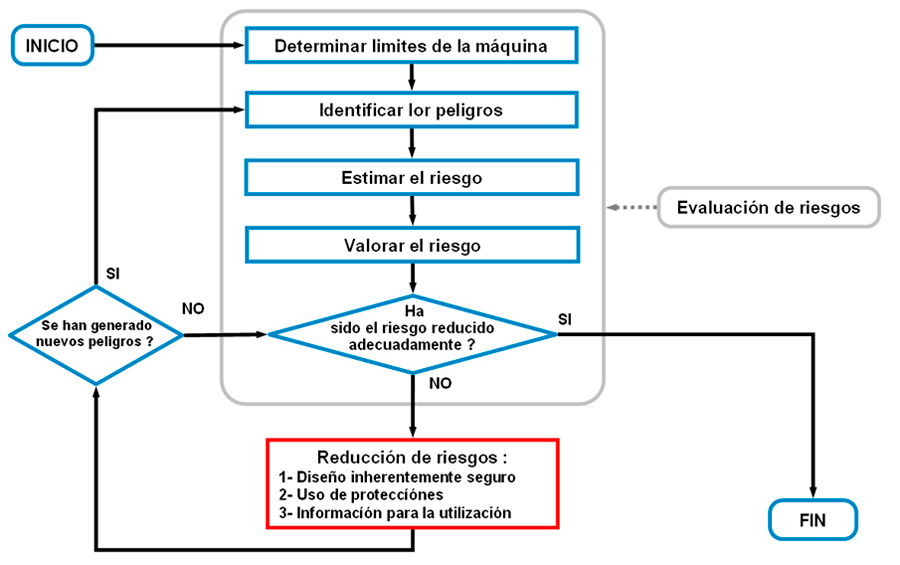
ISO 12100 establishes an iterative process for risk assessment and risk reduction that includes:
- Determining the machine's limits: Define the intended use, operating conditions, and other relevant restrictions.
- Hazard identification: Identify all potential hazards, such as mechanical, electrical, thermal, noise, vibration, radiation, hazardous substances, and ergonomic factors.
- Risk assessment and evaluation: Determine the severity and likelihood of occurrence for each identified hazard.
- Risk reduction: Implement appropriate protective measures and verify their effectiveness to ensure that the residual risk is acceptable.
Need help with this topic? Contact us.
[button title=»CONTACTO» link=»https://www.grupo-tice.com/contacto/» target=»_blank» align=»center» icon=»» icon_position=»» color=»» font_color=»» size=»2″ full_width=»» class=»» download=»» rel=»»]
Hazards in the Use and Design of Industrial Machinery
In the context of industrial safety, identifying and understanding the hazards associated with machinery is the first step toward ensuring a safe and compliant work environment. The ISO 12100 classifies these hazards into various categories, ranging from mechanical risks to hazards arising from human interaction with the machine.
Types of hazards in industrial machinery
The standard identifies various types of hazards that may arise during a machine's life cycle:
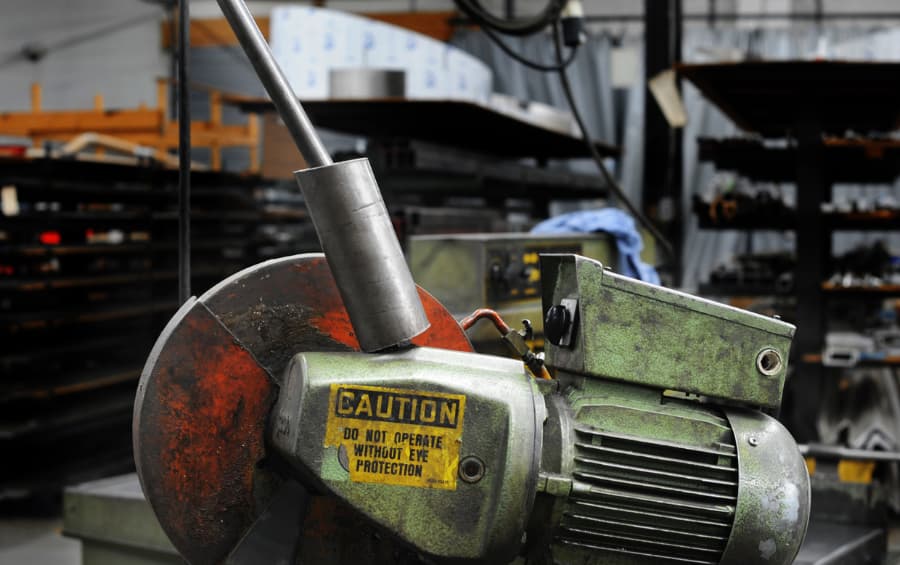
Mechanical hazards:
- Contact with moving parts or rotating components.
- Entanglement between moving and stationary parts.
- Blows or impacts caused by loose parts.
Electrical hazards:
- Direct or indirect contact with active components.
- Overheating and short circuits that can cause fires.
- Electrostatic charges or poor insulation.
Thermal hazards:
- Surfaces that are extremely hot or cold and can cause burns.
- Emission of flames or thermal radiation
Hazards associated with noise and vibrations:
- Prolonged exposure to high noise levels can harm hearing.
- Vibrations that cause operator fatigue and structural damage to the machine.
Hazards from radiation and hazardous substances:
- Emission of optical, ionizing, or electromagnetic radiation.
- Leaks or mishandling of toxic, flammable, or corrosive substances.
Ergonomic hazards:
- Forced or repetitive postures that cause fatigue or musculoskeletal injuries.
- Excessive physical strain due to poor machine design.
How to mitigate these hazards according to ISO 12100
ISO 12100 establishes a structured approach to risk reduction, prioritizing the following actions:
- Hazard elimination through design: Design the machine in such a way as to minimize inherent risks.
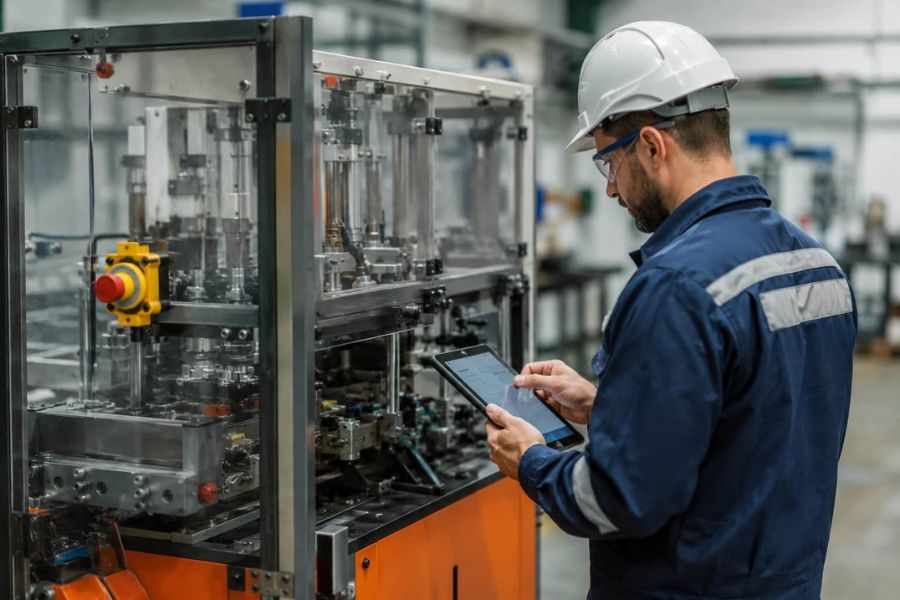
- Technical protective measures: Installation of physical guards, safety sensors, and emergency stop devices.
- Information and warnings: Use of appropriate signage, clear user manuals, and specific training for operators.