What is the difference between the European CE mark and the CE mark found on Chinese products?
The CE acronyms we see printed on industrial equipment convey trust and safety, as they indicate that the machinery complies with a set of technical requirements and criteria set out by specific safety directives.
CE marking is mandatory in the European Union for all goods traded within it, as it signifies that the equipment manufacturers have carried out all relevant checks and that it complies with the requirements of this institution.But these CE markings can also be seen on dubious quality products or equipment from China. Is it the same marking? The truth is no, and they can cause confusion.
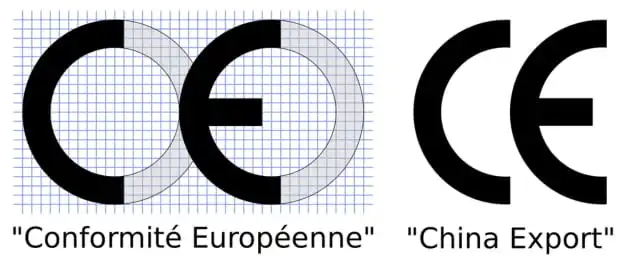
These letters do not correspond to the European ones, which literally mean “European Conformity”. These initials are the abbreviation for China Export and simply indicate that the product comes from this Asian country.Unlike the European CE mark, the China Export mark does not indicate that the product in question has undergone any checks or has been manufactured in accordance with European safety, health, and environmental guidelines. In other words, that machine offers no guarantee.The importance of knowing how to distinguish them. What are these differences?
As we've seen, the CE mark tells us that equipment complies with legal and quality criteria set by the European Union; the other simply indicates the product's origin. It is therefore very important to know how to distinguish between the two to identify machinery that has passed the relevant checks and offers safety guarantees.At first glance, both symbols are very similar and, as I mentioned before, it can even cause confusion.
The initials are written in the same rounded typeface, in the same black colour and the same size..
What can we look at to properly differentiate between Chinese CE and European CE?
One needs to pay attention but if we look closely we will see two significant differences. These are:
- We must pay attention to the position of the letters
- And also in the distance between them. If we frame each of the initials in separate circles, it can be seen that the E in the Chinese symbol is closer to the C, their circumferences interlinking. In contrast, in the European marking the letters are more separated, with the two circles further apart and only connected by their edge.
Additionally, the European team will be accompanied by specific documentation, the declaration of conformity, which includes the name and address of the manufacturer (or EU representative), the product's specifications and characteristics, technical requirements, evaluation bodies, and the date; it will also have operating instructions.What is the CE marking supposed to be like?
- European regulations state that the CE marking should be affixed in a visible, legible place and in a way that prevents it from being erased.
- The acronyms must have a minimum height of 5 millimetres and maintain the proportions we have seen previously.
- All equipment or machinery must be marked before being placed on the market.