The Suitability for an industrial conveyor according to Royal Decree 1215/97 This is a key performance indicator when a transport line remains valid from a productive point of view, but presents risk points that need to be corrected to improve worker safety. In facilities with Conveyor belts, conveyor systems for boxes or handling systems, it is common to detect access to moving parts, trapping zones or manoeuvres that require greater operational control.
In these cases, adapting the machine does not solely consist of adding guards, but rather in analysing its actual operation and defining a technical solution that combines safety, operability, and maintenance. Within the framework of Royal Decree 1215/1997, these types of adaptations allow for risk reduction, the orderly and safe use of machinery, and improved staff confidence in the facility. At Grupo TICE, we approach these projects from a practical, technical perspective that is tailored to the reality of each industrial process through our RD 1215/1997 adaptation service.
What does the retrofitting of an industrial conveyor involve?
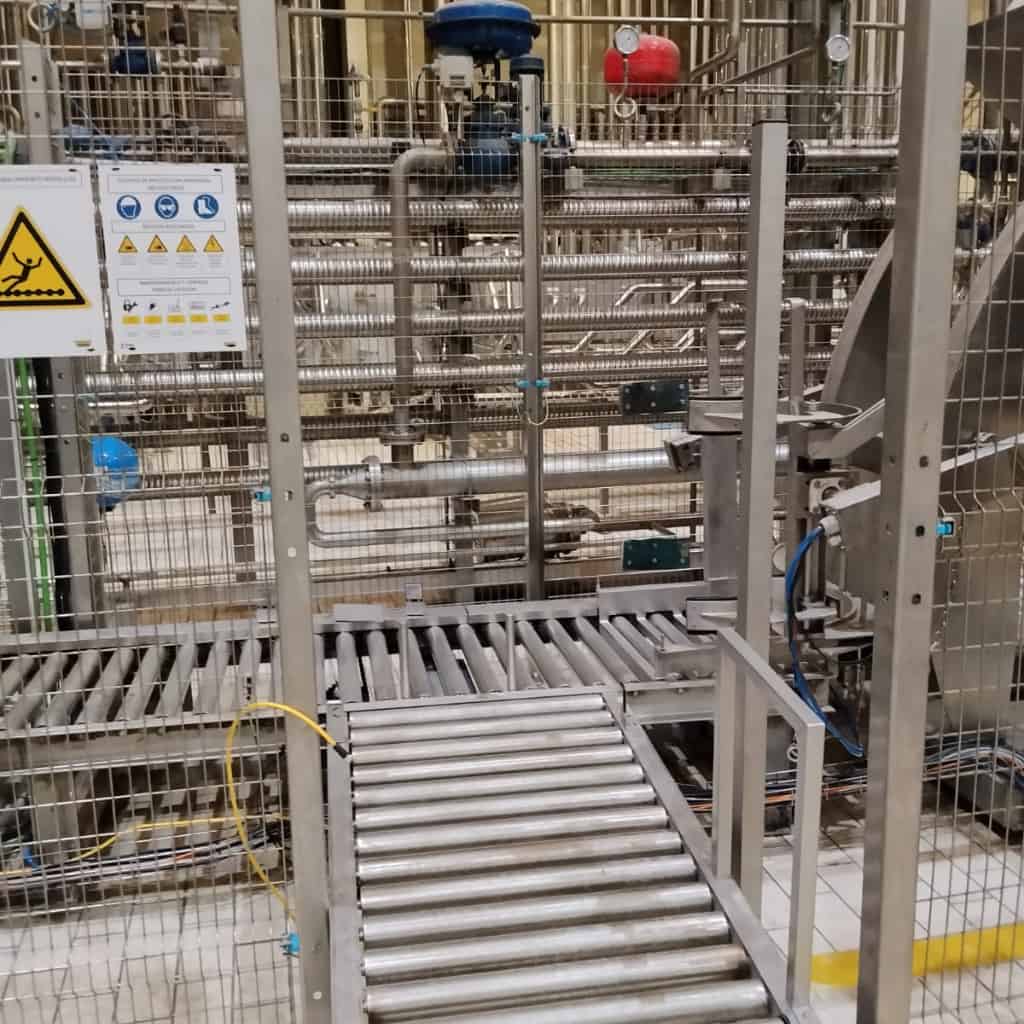
The suitability of an industrial conveyor involves analysing the risks present in the equipment and applying the necessary technical measures to make its use safer. In a Roller conveyor for boxes, this may involve acting on access to dangerous areas, improving the stopping system, incorporating shelters, install fenced perimeter or add control devices such as photocell, sensor magnetic, relay de Safety y Systems de re-arm.
This type of intervention is especially important for machinery that remains in use and is part of the daily production process. The adaptation does not aim to replace the installation, but to make it safer and more functional, reducing exposure to Machine risk without penalty to operations.
When is an adaptation necessary for belt conveyors and roller conveyors?
The need typically arises when accessible areas with moving parts, entrapment points, insufficient physical barriers, or improvable safety logic are detected. It is also common for the company to decide to act after an internal review, an observation by the prevention service, an audit, or a general update of its machine safety criteria.
In logistics and food sectors, where the flow of boxes and products is constant, any uncontrolled access can become a critical point. Therefore, the Industrial machinery safety it should not be approached generically, but according to the actual operation of the equipment, the working environment, and how operators interact with the installation.
Project's initial situation: improve the operational safety of the conveyor
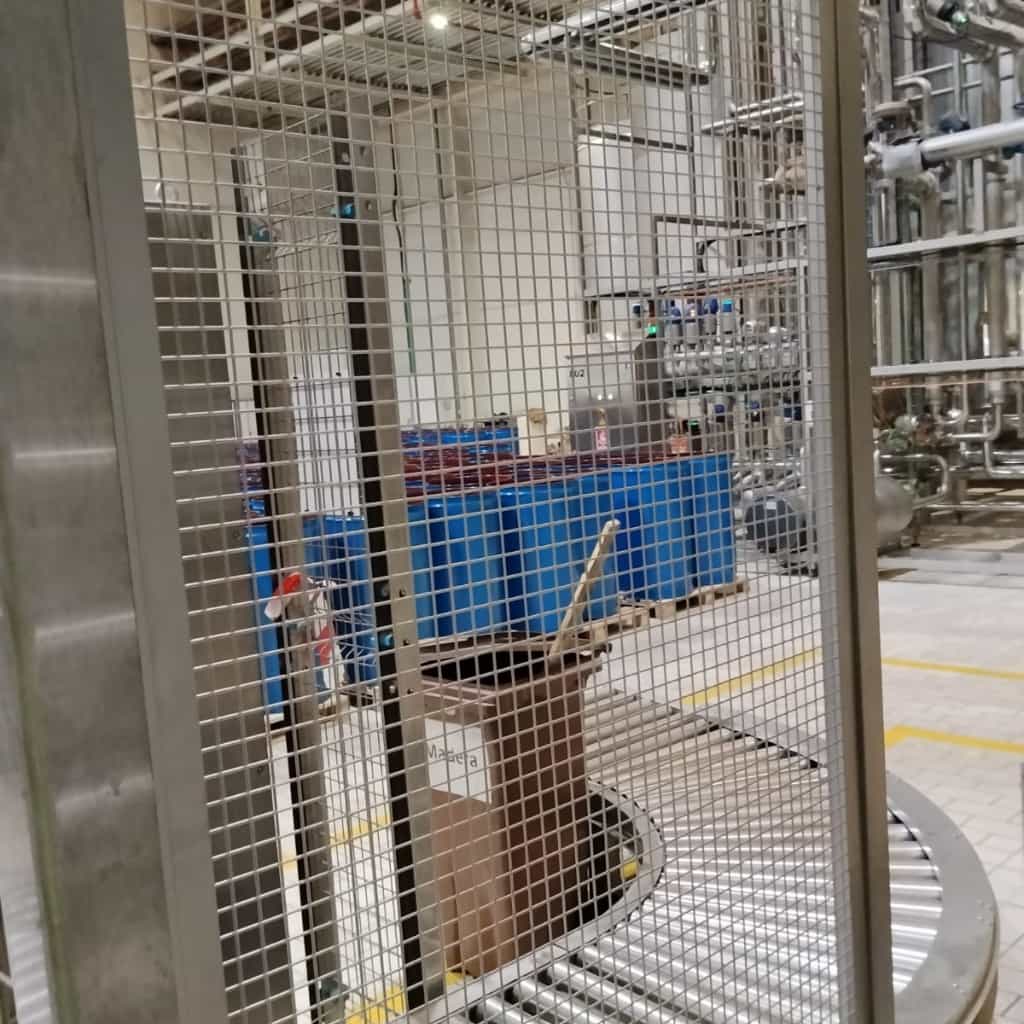
In this project, the starting point was an industrial roller conveyor for boxes that required an improvement in its operational safety.If you want to know more about industrial safety, visit our service about Industrial Safety.
The installation fulfilled a clear productive function within the process, but showed an evident need to reinforce protection in certain areas.
The objective was to restrict access to moving parts, better control certain manoeuvres and reduce the level of staff exposure to risky situations. For this, a superficial approach was not sufficient. It was necessary to study the equipment, assess how it is actually used, and design an adaptation that was consistent with its operation.
This type of situation is common in many factories where machinery has aged correctly from a mechanical standpoint but requires a technical update in industrial safety. This is precisely where compliance with RD 1215 for machinery makes sense: adapting the equipment to safer operating conditions without compromising its productivity.
Work methodology for the adaptation of the industrial conveyor
At Grupo TICE, an adaptation of this nature is approached with a clear and methodical approach, aimed at resolving the problem with technical expertise.
Initial analysis and risk assessment
The first step is to study the conveyor, identify hazardous areas and assess access to moving parts. In this phase, the interaction between operator and machine, the existence of trapping points and the operating logic of the system are analysed.
Definition of the technical solution
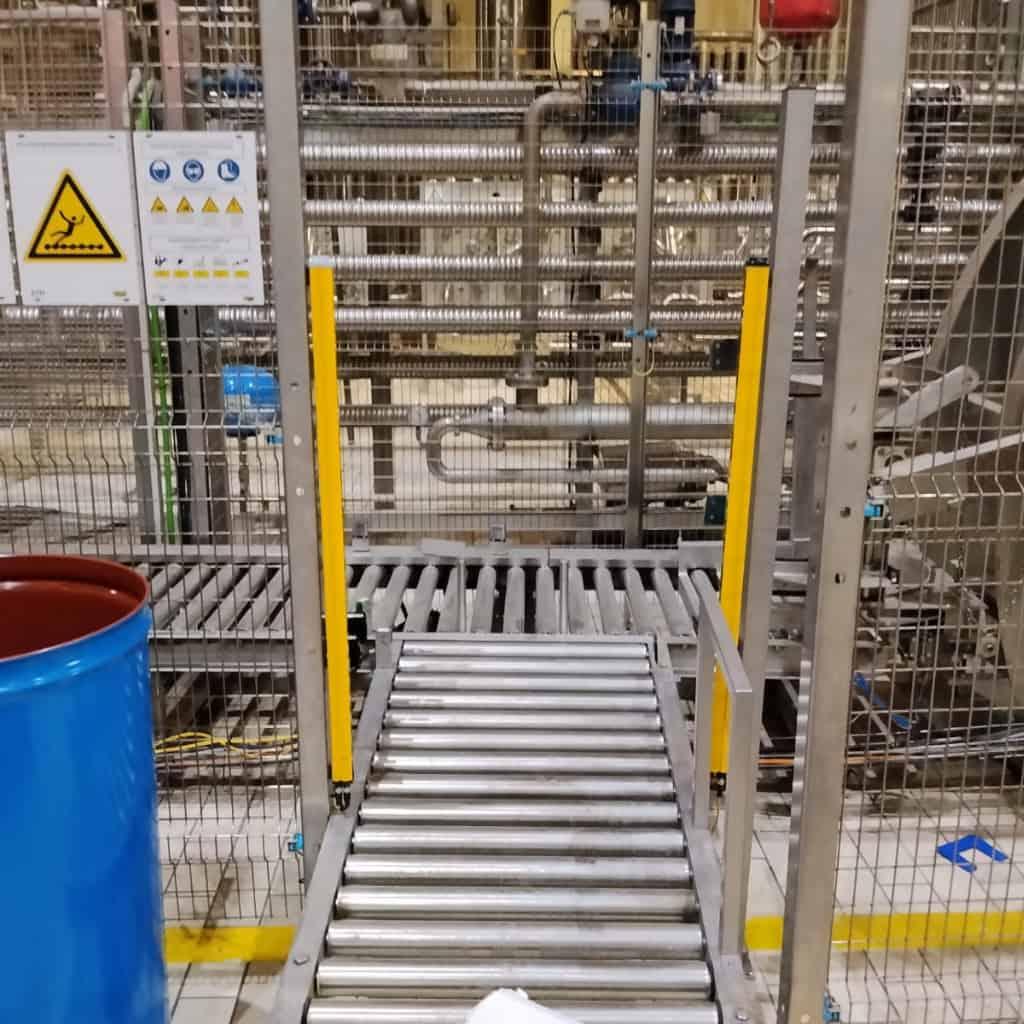
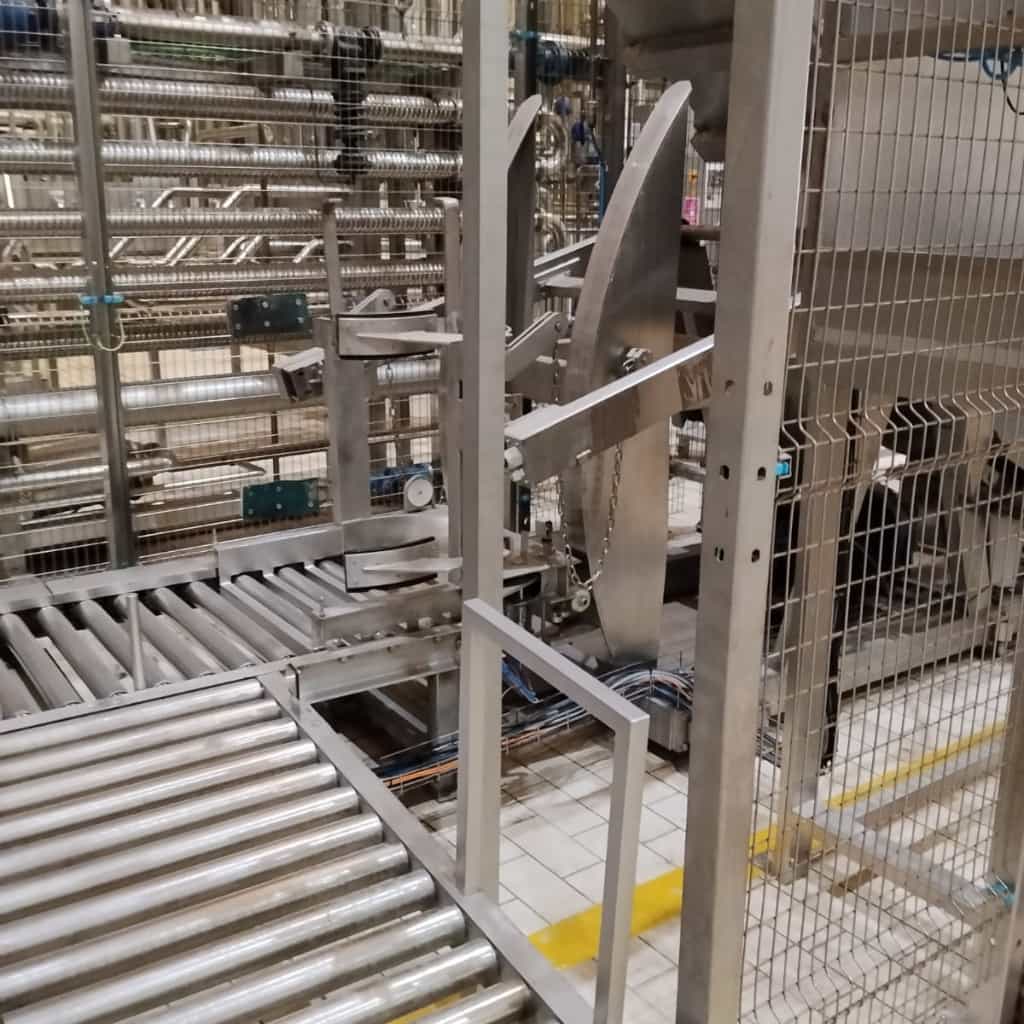
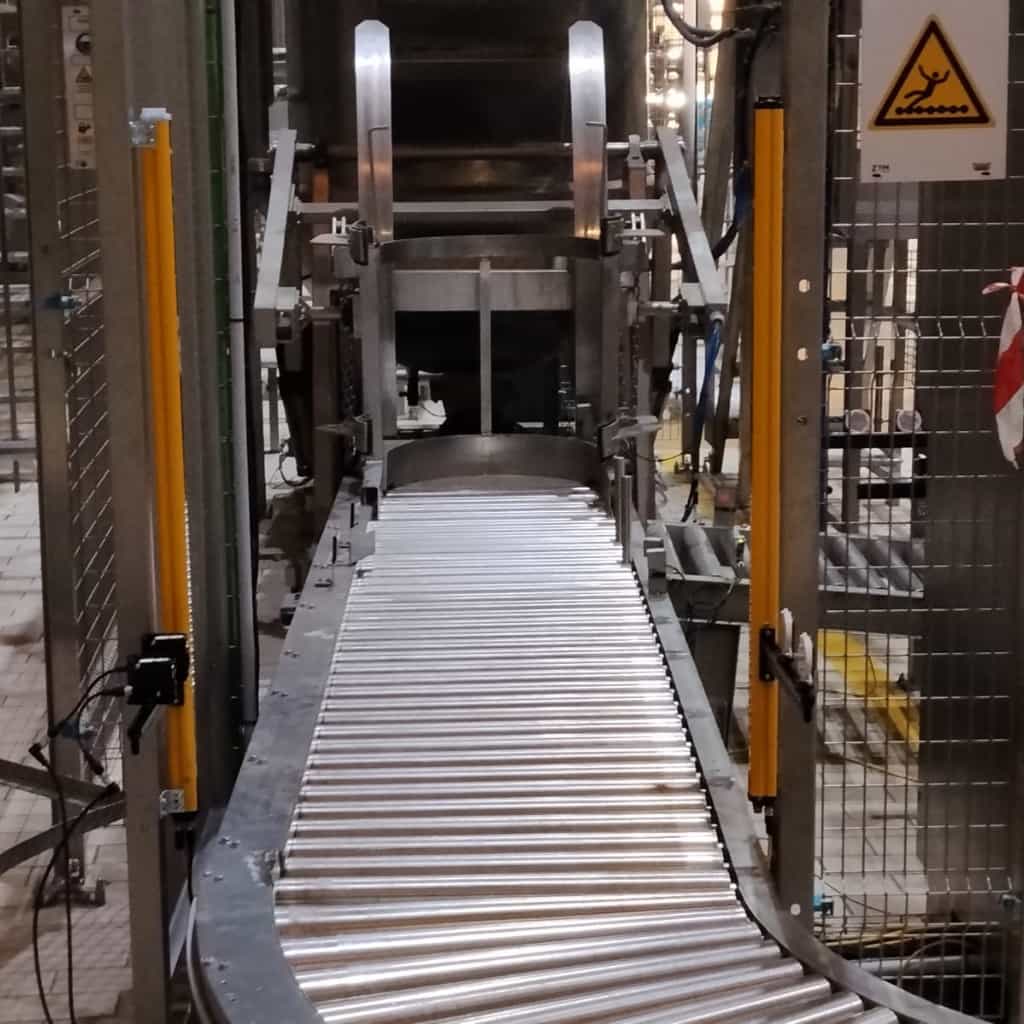
From that assessment, the most appropriate corrective measure is defined. In this case, the action includes the installation of fenced to limit access, a photocell to monitor transit or presence zones, a system of Emergency stop, interlocking devices using magnetic sensor and secure logic managed via relay safety and manoeuvre of re-arm.
Installation of guards and protective measures
Adequacy also includes the installation of shelters on access to moving parts. This part is essential as it directly protects areas where entrapment, contact or interference with the equipment's movement may exist.
Final verification and technical documentation
Once the solution has been installed, it is checked that the machine can continue to operate safely and that the measures implemented genuinely address the identified risk. Furthermore, the action taken is documented to provide a technical record of the work carried out and to facilitate the preventative management of the equipment.
Key aspects and difficulties in adapting conveyor machinery
In the adaptation of Conveyor belts and industrial conveyors, one of the main challenges is to balance safety with functionality. It's not just about closing off access, but doing so without hindering correct use, regular maintenance, or process continuity.
Another important aspect is the correct integration of security logic. Elements such as Emergency stop, the magnetic sensor, the photocell Or re-arm They must work in a coordinated manner so that the facility responds safely to openings, accesses or operational incidents.
Furthermore, in sectors such as logistics and food, the solution must take into account the movement of operators, frequency of intervention, cleaning, maintenance, and environmental conditions. Therefore, effective adaptation does not start from standard solutions, but from a well-designed technical evaluation.
Benefits of adapting an industrial conveyor
The suitability of machinery offers clear advantages from a preventive and operational standpoint. Among the most relevant are:
- Restriction of access to dangerous areas.
- Improved control over moving parts and pinch points.
- Incorporating more robust security logic.
- Reinforcement of operator and maintenance personnel protection.
- Improving safety perception on site.
- Alignment with the safety criteria of RD 1215.
- Extending the service life of the installation without the need to replace it.
- Improving the company's preventive organisation.
Ultimately, the performance not only improves the physical protection of the machine, but also the way it is used, monitored and maintained within the process.
Applicable regulations: Royal Decree 1215/1997 and safety in work equipment
In Spain, the Royal Decree 1215/1997 It establishes the minimum safety and health provisions for the use of work equipment by workers. Among other obligations, it states that the employer must adopt the necessary measures to ensure that the equipment is suitable for the work and is appropriately adapted to guarantee the safety and health of the workers, as well as maintaining it in safe condition and documenting checks when appropriate.
When applied to an industrial conveyor, this means that the company must act when the machine presents safety deficiencies, unsafe access, or insufficient guards. Adequacy should not be understood as a mere optional improvement, but as a technical intervention aimed at reducing real risks in the use of the equipment.
If your company has a Industrial conveyor, a line of boxes or machinery with unsafe access to moving parts, in Grupo TICE we can help you analyse the case and define the most suitable solution by offering our service of Adaptation to RD 1215/1997 . We will study the risk, propose the necessary protective measures and develop a solution designed to realistically and functionally improve operational safety.
Frequently Asked Questions about Industrial Conveyor Suitability
It is advisable to do so when there is access to hazardous areas, moving parts without sufficient protection, or manoeuvres that may compromise the operator's safety.
It is also recommended when a company wants to update its machinery safety criteria, respond to preventive observations, or improve the protection of a facility that remains productively valid.
The most common risks are Entrapments, unintended access to moving parts, interference during adjustment or maintenance tasks, and a lack of control in certain passageways.
Therefore, when selecting a roller conveyor, it's essential to consider not only the mechanical aspects but also the safety logic and how personnel interact with the system.
It depends on the situation, but fencing, guards, emergency stop, photocell, magnetic sensor, interlocking systems, safety relay, and reset operations can be incorporated.
The key lies in designing a solution tailored to the team's actual workflow, not in installing components in isolation or without a global logic.
Not necessarily. In many cases, retrofitting allows the existing machine to continue to be used, provided that the work is well-defined and genuinely improves safety conditions.
This is particularly useful in installations where equipment remains operational and profitable, but requires a technical upgrade in terms of preventative maintenance.
The relationship is direct, as Royal Decree 1215 lays down the minimum safety conditions for the use of work equipment by workers.
When a machine presents unsafe access or insufficient protection, retrofitting is a technical means to reduce risks and adapt the equipment for safer use within the working environment.
Yes. In GTICE shape We develop comprehensive safety projects for machinery and technical adaptation of industrial equipment, analysing each case to define functional, realistic protection measures aligned with the installation's needs.
Our work focuses on studying the risk, designing the solution, implementing the measures and helping the company to have safer machinery that is better prepared for daily use.
Yes, of course. At Grupo TICE, we understand that an industrial automation project doesn't end on the day of commissioning. We stay close to the client to ensure the system continues to run stably and to support any future plant needs.
We offer technical support for incidents, operational adjustments, performance enhancements, and extensions as processes evolve. Furthermore, we work with a continuity approach: we maintain system consistency, ensure change traceability, and help ensure that maintenance and production always have reliable control.
If you need support or want to propose an improvement, contact us and we'll review it with you in an agile and technical way.
The cost of an industrial automation and electrical service primarily depends on the scope of the project and the condition of the installation. Intervening on an existing line is not the same as developing a complete solution, nor do factors such as the complexity of the process, the number of signals/equipment to integrate, the criticality of downtime, the documentation and verification requirements, or whether obsolete equipment needs to be modernised, have the same impact.
At Grupo TICE, we work with a technical approach: we define the scope, identify risks, and propose a solution tailored to the plant's reality, ensuring the investment is coherent and justifiable.
If you tell us your needs and the context of the installation, we will prepare a tailored technical assessment and proposal. Get in touch and we'll review it with you.
Hiring a specialist company for industrial automation and electrical engineering makes a difference when production continuity, safety, and system maintenance are at stake.
At Grupo TICE, we provide an industrial engineering approach that reduces uncertainty: we design coherent solutions across hardware, control, and commissioning, with reliable integration of equipment and communications. This translates into fewer recurring issues, clearer diagnostics for maintenance, and an installation ready to grow without patches that ultimately lead to downtime.
Furthermore, a specialist works with verification criteria and regulations, leaving documentation and technical traceability that facilitate audits, expansions, and future support.
If you wish, tell us about your situation and we can advise you on the best way to approach your project.