What exactly is production process automation in Industry?
Automation of production processes in industry
From its beginnings, industry in general has been evolving in line with the advancement of technology. From the earliest machines, designed without the specifications in various areas now present such as safety, environmental impact (waste, noise), efficiency and others, to the machines of today, there has been a continuous optimisation of them.The impact of this technological evolution applied to industrial production processes is improving aspects of them. Both qualitative improvements in terms of working conditions and quantitative improvements in terms of production yields are noteworthy.
The automation of industrial systems or production processes refers to technological and engineering applications through which these processes are carried out without human labour.This continuous evolution continues to this day with the advent of Industry 4.0 and the implementation of intelligent and robotic systems, among others.
What types of applications in automation can we find?
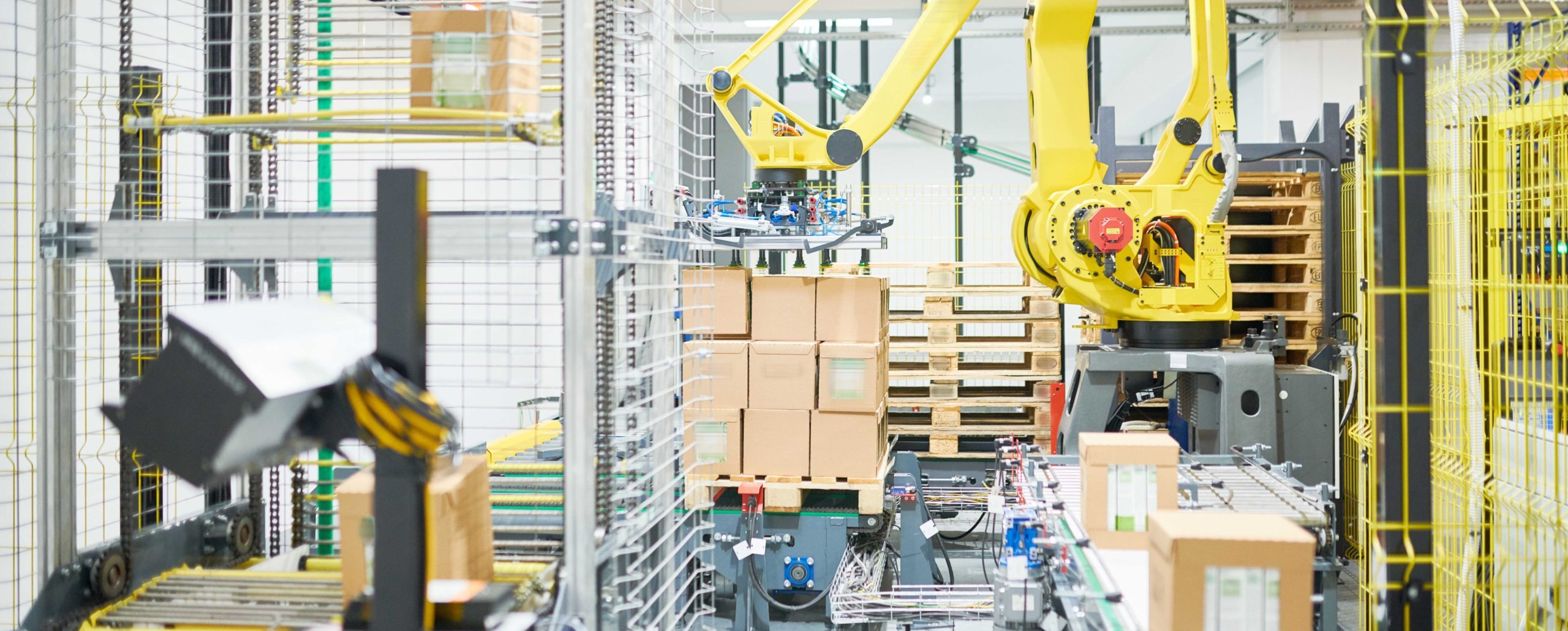
As of today, industrial automation has a variety of applications. These can include processes that end up being aggressive to safety or health if performed manually, such as repetitive handling, loading or control processes, ergonomically unacceptable processes, processes dangerous to the worker due to the presence of harmful substances or that must be carried out in harsh environments, etc. There are also collaborative applications for carrying out tasks requiring high precision. Another application is simply when the aim is to increase the capacity to perform tasks and, consequently, efficiency and production.
What are the 5 benefits or advantages of production processes?
The automation of production processes brings improvements in:
- Production capacity, given the capacity to increase production cadences and the possibility of developing continuous shifts.
- EfficiencyThis leads to the elimination of human error. Costs are reduced due to rejected products and downtime.
- QualityGiven the characteristic repetitiveness of automatic intelligent systems.
- Traceability given the ability to control, correct, and make the state of data flows visible
- Punctualityboth at the level of internal operational coordination and company workflows, and at the level of delivery of the finished product to the client.
How do these automated processes affect businesses?
Industries that implement automated systems in their production processes gain a competitive advantage. From an operational perspective, this is because they increase their production capacity, their price competitiveness, and their market share, and from the perspective of customer trust, because they provide a product with a greater guarantee of quality given the repetitiveness with which it has been produced.
Which are the most industrialised sectors?
Initially, it was industries that produced parts, bags, boxes, or other items in large daily quantities that were the first to adapt greater automation applications to their production processes. Although the necessary investments for this were considerable, they were justified by production needs and commitments and by the rapid return on investment that occurred. We encounter industries from various sectors such as automotive, chemical, plastics, food, metal, and others.
What's going to be the trend from here on out?
However, nowadays, more companies and industries are incorporating automated systems, not only due to demands for increased production, but also to benefit from advantages such as the repeatability they offer, an increase in the quality of the finished product, reduction in production times and costs, improvement in the working conditions of their operators, increased product control and traceability, and, in general, an increase in the company's competitiveness.