In the field of Food industry, it is crucial to carry out a rigorous Food risk assessment. This not only guarantees the Food safety, but also protects consumer health. Below, we will address the key concepts of the Food hazards, the Risk factors in diet and the necessary regulation. Our aim is to invite readers to trust our services to ensure a correct risk assessment in their food processes.
In this article, we will first present a case of food risk assessment carried out by our team, and then we will answer some frequently asked questions about this type of food hazard assessment.
Food risk assessment case study developed by Grupo Tice
What are we going to see?
- General Information
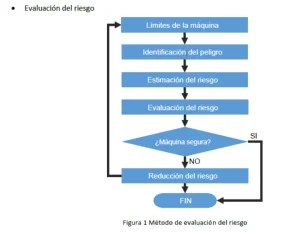
- Food risk assessment method
- Case to be Evaluated
- Further information
General information about this food industry risk assessment case
The aim of this risk assessment is to analyse compliance with the regulatory requirements applicable to the equipment. This compliance will be assessed in accordance with the applicable national legislation, based on the applicable harmonised standards, in this case Royal Decree 1215/1997.
All machinery must comply with European Directive 89/655/EEC, transposed into national legislation through Royal Decree 1215/1997 and revised in Royal Decree 2177/2004, concerning minimum health and safety requirements for the use of work equipment by workers at work. This directive guarantees compliance with minimum occupational health and safety requirements in order to ensure the safety of workers.
It is the responsibility of employers to ensure that the work equipment provided to workers is suitable for the work and does not compromise their safety and health.
In accordance with Royal Decree 1215/1997 on Work Equipment, in Article 4:
“The employer shall take the necessary measures to ensure that work equipment whose safety depends on its installation conditions is subjected to an initial check after installation and before being put into service for the first time, and to a further check after each assembly at a new site or location, in order to ensure correct installation and satisfactory operation of the equipment.”
“Additional checks on such equipment must be carried out whenever exceptional events occur, such as alterations, accidents, natural phenomena or prolonged disuse, which may have detrimental consequences for safety.
“The results of the checks must be documented and available to the labour authority. These results must be kept for the entire lifespan of the equipment.
In order to ensure that the equipment complies with the requirements of the applicable directives, this risk assessment (on-site analysis) has been carried out with the aim of eliminating or reducing potential risks to the maximum extent possible, and to ensure an appropriate procedure. Grupo Tice has followed the methodology established in the harmonised standard “EN ISO 12100 – Safety of machinery. General principles for design, risk assessment and risk reduction”. This standard specifies the principles for risk assessment and risk reduction.
2. Method of a food risk assessment
According to the EN ISO 12100 standard, risk assessment is a series of logical steps that allows for the systematic analysis and evaluation of the risks associated with a machine.
Risk assessment is followed, where necessary, by risk reduction. The iteration of this process may be necessary to eliminate risks as far as possible and adequately reduce risks by implementing protective measures. The goal is to achieve the greatest possible risk reduction.
The risk assessment process includes:
- Risk analysis
- Determination of limits
- Hazard identification
- Risk assessment
- Risk assessment

3. Case for Evaluation
This document explains the parts of a risk assessment for a company in the food sector that contacted us because they needed European certificates of conformity for commissioning in Spain under the requirements of RD1215/97 and CE Marking.
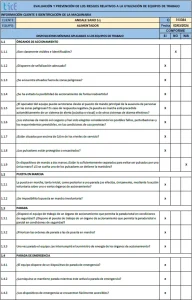
First, we visit the client and take general images of the equipment to be assessed. Next, we collect the technical data (weight, function, power, voltage, current, dimensions) and once this information has been gathered, we carry out a checklist for each piece of equipment (example).

The teams being evaluated have carried out work on a set of machines for the manufacture of tortillas, from the grain to the baking of the final product.
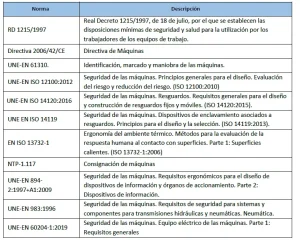
We are adding the rules that apply to that particular machine. For example:

To identify, estimate, and reduce the hazards present in the machine, we conducted a preliminary hazard analysis using a proprietary technique: TICE Hazard Rating (THR).
Our TICE Hazard Rating technique has been used to analyse the risks associated with machinery. The technique offers an analytical approach to the preliminary hazard analysis method.
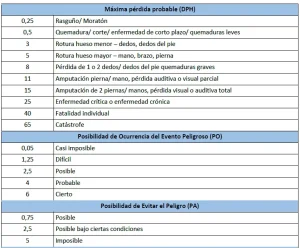
The assessment methodology is based on our judgement and experience. In this system, we take into account: the assessment of the Maximum Probable Loss (MPL) factors, Possibility of Hazardous Event Occurrence (PO), Possibility of Hazard Avoidance (PA) and Frequency and/or Duration of Exposure (FE).
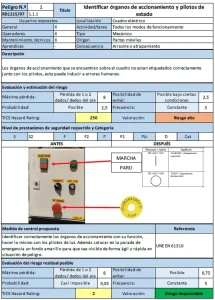
For each hazard, the risk assessment is carried out. Example:

The above parameters may have the following scorable values:

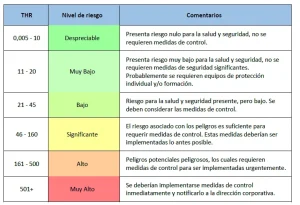
Following a comprehensive review of the machine based on applicable standards, a numerical value is determined for each factor during the Risk Assessment and the TICE Hazard Rating is calculated. The numerical result is used to evaluate the risk associated with each hazard by comparison with predetermined acceptable levels.
The numerical range of the TICE Hazard Rating calculated can be from 0 to 9750, where 0 is the minimum value showing no risk and 9750 is the highest risk.
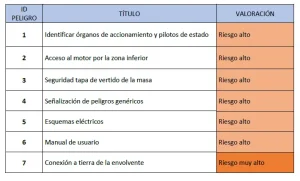
Hazards detected on the machine being assessed:

Hazard sheet for one of the machine's parts that was evaluated:

Finally, the risk assessment carried out reveals non-compliance with Royal Decree 1215/97, concerning minimum safety and health provisions for the use of work equipment by workers at work.
In order to ensure that all applicable health and safety requirements are met, the company, as the manufacturer and owner of the equipment, is responsible for rectifying all deficiencies described in this report as soon as possible.
The equipment referred to in this report IS NOT COMPLIANT with applicable legal and regulatory requirements.
Our added value is that, in addition to identifying, assessing and classifying risks, we propose a control measure based on the legislation corresponding to that detected hazard and under the relevant Spanish or European regulations. In this case, we have made a proposal based on the UNE EN 61310 standard.
4. Additional information about this assessment work
Does your business need a food risk assessment?
What is a food hazard?
Los food hazards are those factors that can compromise the Food safety and therefore the health of those who consume them. According to the Spanish Agency for Food Safety and Nutrition (ASEAN), an Food hazard can be biological, chemical or physical in nature. Risk factors in diet include pathogenic microorganisms, pesticide residues and physical contaminants such as fragments of glass or metal.
Types of food risks
- Biological hazardsBacteria, viruses, parasites and fungi.
- Chemical hazardsPesticide residues, antibiotics, heavy metals and additives.
- Physical risksFragments of glass, metal, plastic, or any other foreign material.
Importance of risk analysis in food
The risk analysis in food it is a fundamental process for identifying and controlling Food hazards. This analysis involves several stages, from hazard identification to risk assessment and management. Through a Food risk assessment matrix, the probability and severity of risks can be determined, allowing for the implementation of preventive and corrective measures.
Stages of risk analysis
- Hazard identificationTo determine what can cause harm.
- Risk assessmentEstimate the probability and severity of the damage.
- Risk managementImplement measures to minimise or eliminate risks.
- Risk communicationInform all stakeholders of the risks and measures taken.
Food safety: risk analysis and regulation
The Food safety is closely linked to the correct Food risk assessment. Compliance with current regulations is essential to ensure that food is safe for consumption. Regulations, both national and international, establish the criteria and procedures that must be followed to manage food hazards. In Valencia, our company, Grupo TICE, is dedicated to offering services Food risk assessment in accordance with ISO 12100. For more information, visit our page on Risk assessment in Valencia.
Regulations and standards
- ISO 22000Food safety management systems.
- HACCPHazard Analysis and Critical Control Points.
- Regulation (EC) 178/2002General food legislation in the EU.
Risk factors in diet
Identify the Risk factors in diet it is essential for any food industry. These factors can vary depending on the type of food, the production process, and the storage and distribution conditions. Some of the main factors include:
- Cross-contaminationThe transfer of contaminants from one food to another.
- Storage temperatureMaintain food at appropriate temperatures to prevent pathogen growth.
- Staff hygieneGood hygiene practices by food handlers.
Strategies for minimising risks
- Staff trainingEducate employees on safe food handling practices.
- Process controlMonitor and control production stages to ensure compliance with regulations.
- Regular inspectionsCarry out periodic audits and reviews to identify and correct potential failures.
Food risk assessment in the industry
Carry out a Food risk assessment in the industry it is a continuous and dynamic process. It's not just about identifying and managing the food hazards existing ones, but also to anticipate new risks that may arise due to changes in production processes, new ingredients, or variations in regulations.
Benefits of a comprehensive evaluation
- Cost reductionAvoid costs associated with product recalls and litigation.
- Reputation ImprovementDemonstrating a commitment to food safety can improve consumer confidence.
- Regulatory complianceEnsure products comply with all applicable regulations.
At Grupo TICE, we have a multidisciplinary team specialised in Food risk assessment. Our experts are trained to carry out a risk analysis in food detailed and rigorous, ensuring your company complies with the highest standards of Food safety.
We invite you to visit our headquarters in Valencia to learn more about our services. For further information, please do not hesitate to contact us and discover how we can help you improve the safety of your food products.
What is food risk analysis in Valencia?
The Food risk analysis in Valencia It is a systematic process used to evaluate and manage risks associated with food. This analysis is essential to ensure that food is safe for consumption and complies with food safety regulations. The process includes three main components: risk assessment, risk management, and risk communication.
Risk assessment
The Risk assessment involves the identification of the Food hazards and the estimation of the probability that these hazards will cause harm to health. This process includes:
- Hazard identificationTo determine the biological, chemical or physical agents that may be present in food.
- Risk characterisationTo evaluate the nature and severity of adverse effects associated with exposure to the identified hazards.
- Exposure assessmentTo determine the probability of consumers being exposed to hazards.
- Risk characterisationIntegrate the information obtained in the previous stages to provide an overall risk estimate.
Risk management
The Risk management focuses on the implementation of measures to control or eliminate food hazards identified during the assessment. This includes establishing policies and procedures to reduce risks to acceptable levels.
Risk communication
The Risk communication It is the exchange of information about risks and management measures between all interested parties, including producers, distributors, regulators and consumers. For more information on best practices for risk communication, you can visit the website of the World Health Organization (WHO).
How are food risks classified?
Los Food risks are generally classified into three main categories: biological, chemical, and physical. Each type of risk has specific characteristics and requires different approaches for its management.
Biological hazards
Los biological hazards include microorganisms such as bacteria, viruses, parasites and fungi which can cause illness in consumers. Common examples of biological hazards include Salmonella, Escherichia coli, and Listeria.
Chemical hazards
Los chemical hazards These can include substances that may be harmful to health if present in food. These can include pesticide residues, industrial pollutants, heavy metals, and unauthorised food additives.
Physical risks
Los physical risks refer to foreign objects that may be present in food and cause physical harm to the consumer. Examples of physical hazards include fragments of glass, metal, plastic or bone.
What is food risk management in Valencia?
The Food risk management in Valencia es el proceso de tomar decisiones y acciones para minimizar los = is the process of making decisions and taking actions to minimise food hazards identified through risk analysis. This process is vital for ensuring Food safety and protect public health.
Implementation of control measures
Risk management involves the implementation of control measures to prevent, eliminate, or reduce risks to acceptable levels. These measures can include:
- Good Manufacturing Practices (GMP)Establish standard procedures to ensure hygiene and safety in food production.
- Hazard Analysis and Critical Control Points (HACCP)Identify critical points in the production process where hazards may occur and establish controls to prevent them.
- Continuous monitoringPerform regular tests and audits to ensure that control measures are working effectively.
Review and evaluation
Risk management also requires the continuous evaluation and review of control measures to ensure their effectiveness. This includes updating procedures and practices in response to new scientific data, changes in regulations, and evolving industry practices.
At Grupo TICE, we are committed to offering comprehensive solutions for Food risk management in Valencia that they comply with international regulations and ensure maximum protection for consumers. To learn more about food risk management, you can consult the resources provided by the European Food Safety Authority (EFSA).
We invite you to visit our headquarters in Valencia to learn more about our services. For further information, please do not hesitate to contact us and discover how we can help you improve the safety of your food products.