In many industries, especially those working with heavy machinery or machining equipment, it remains common to find machines that are fully operational from a production standpoint but have room for improvement in terms of safety. In this context, the Suitability of a surface grinder with safety guards This becomes a key action for reducing risks, protecting the operator and adapting the equipment to safer working conditions. This situation not only causes concern for the company but also for the workers themselves, who may perceive certain pieces of equipment as dangerous if they do not have the appropriate safety features.
This was precisely the case with one of the projects we developed from Grupo TICE in a company in the steel sector located in Sagunto, Valencia, specialising in the distribution, manufacturing, and cutting of steel and sheet metal products. The client approached us with a clear objective: to make their machinery safer and prevent workers from perceiving it as dangerous, thereby improving both staff protection and confidence in the workplace environment.
In this article, we explain what the adaptation of a Surface grinder with safety guards, what risks did the machine present, what technical solution was designed, and what are the advantages of this type of intervention in an industrial environment.
Why is it important to adapt a surface grinder from a machine safety perspective?
The surface grinder is a machine used to machine surfaces with high precision, but it can also present significant risks if access to its dangerous areas is not correctly limited. Among the most common critical points are the working spindle, the movement axes and certain moving parts to which the operator may accidentally be exposed during operation, adjustment or maintenance of the equipment.
On many occasions, the machine continues to work correctly, and the company doesn't detect the problem until clear signs appear: staff unrest, observations from the prevention service, internal reviews, or simply the need to update facilities that have been in operation for years. In these cases, adaptation should not be understood as an isolated action, but as a strategic measure to improve the real safety of the plant and adapt the equipment to safer operating conditions.
Furthermore, when workers perceive a machine as dangerous, this directly affects its use, operational trust, and the preventative atmosphere within the company. Therefore, addressing these types of machines not only reduces risk but also enhances the perception of safety in the workplace.
Initial project situation: need to secure the machine and limit dangerous access.
In this project, the client was looking for a technical solution to make the machine safer and prevent access to hazardous areas. The intervention focused on a Grinding machine plan which required a clear improvement in its safeguards and in the control of access to dangerous elements.
The The main objective was to prevent access to the grinding wheel and the machine's shafts., two areas particularly sensitive from a preventive perspective. To achieve this, it wasn't enough to install a generic physical barrier: it was necessary to design a solution adapted to the actual operation of the equipment, its geometry, and the way operators intervened during work.
This is where machinery suitability really comes into its own. Each machine has specific characteristics, and it's only through a prior technical analysis that a solution can be defined which is safe, functional, and compatible with daily operations.
Action taken: Installation of protective structure, sensors, and security systems
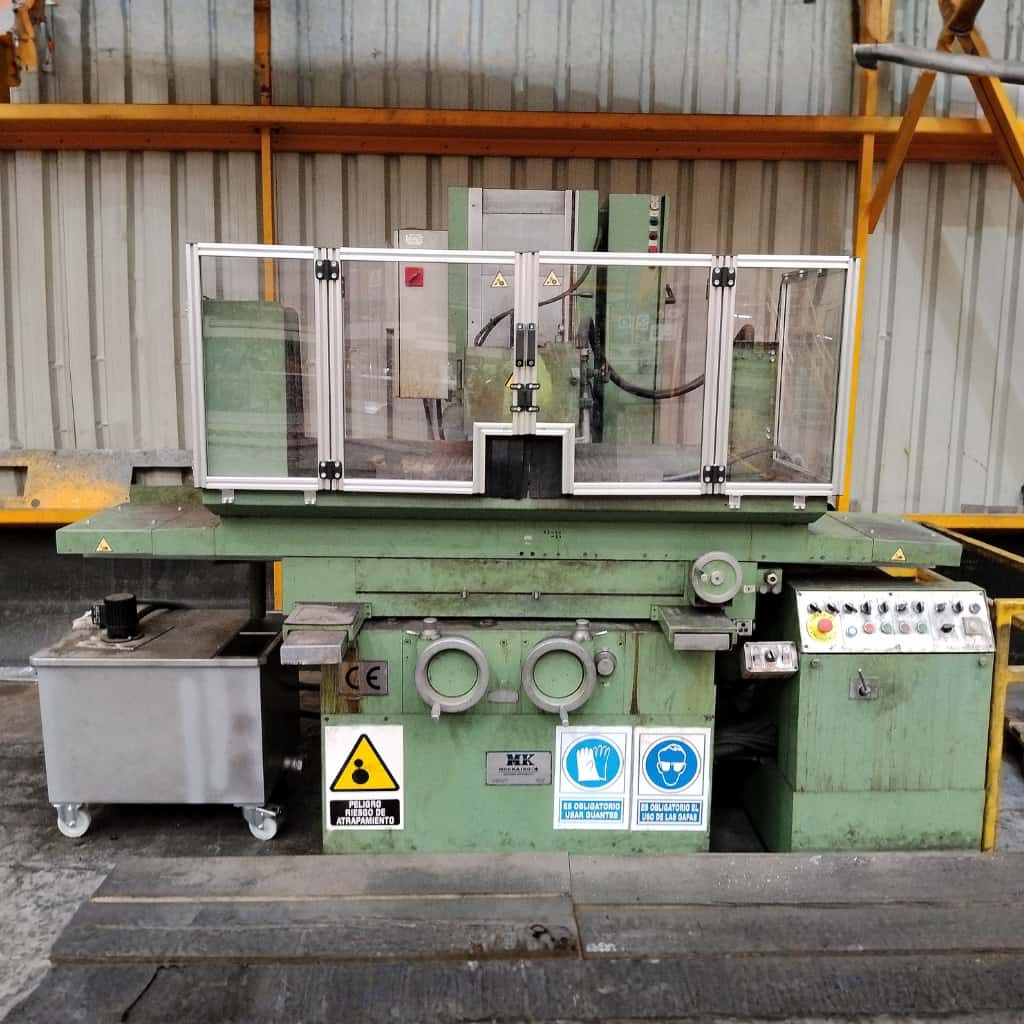
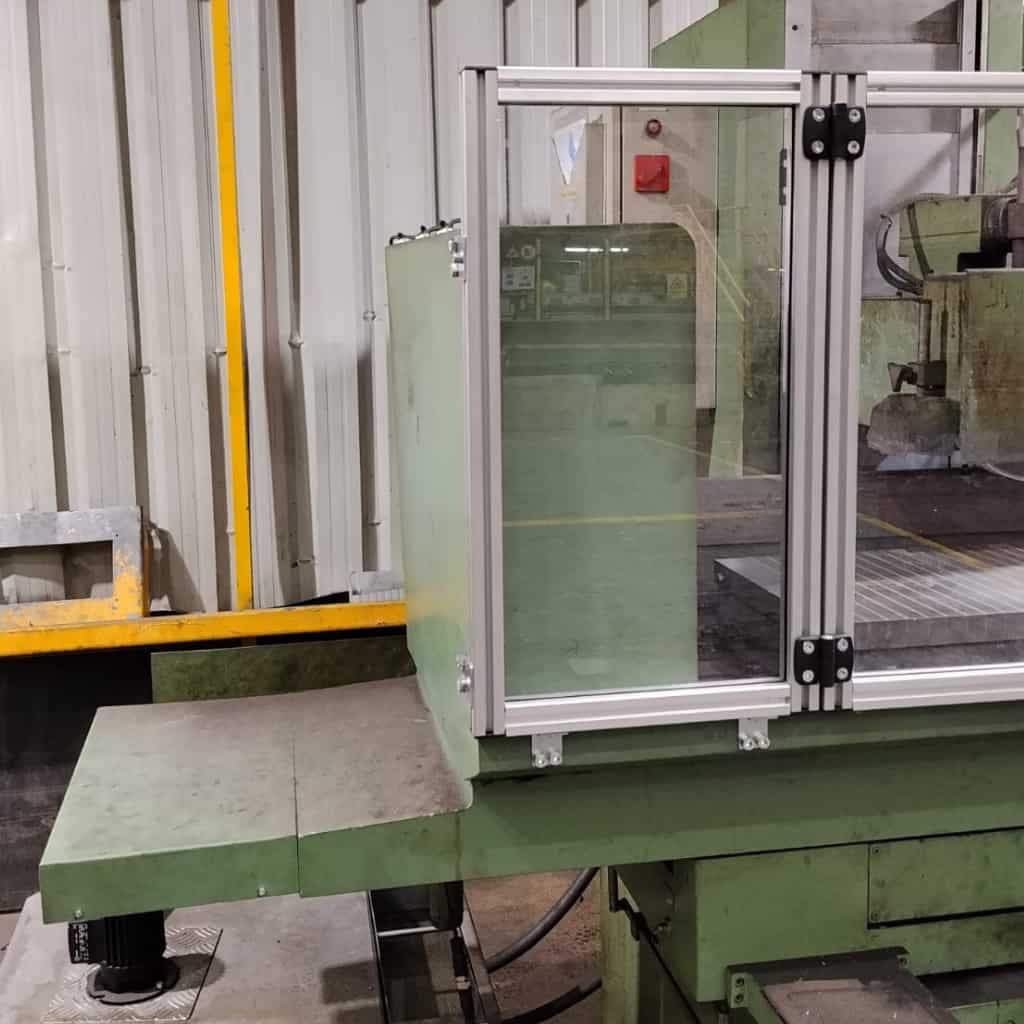
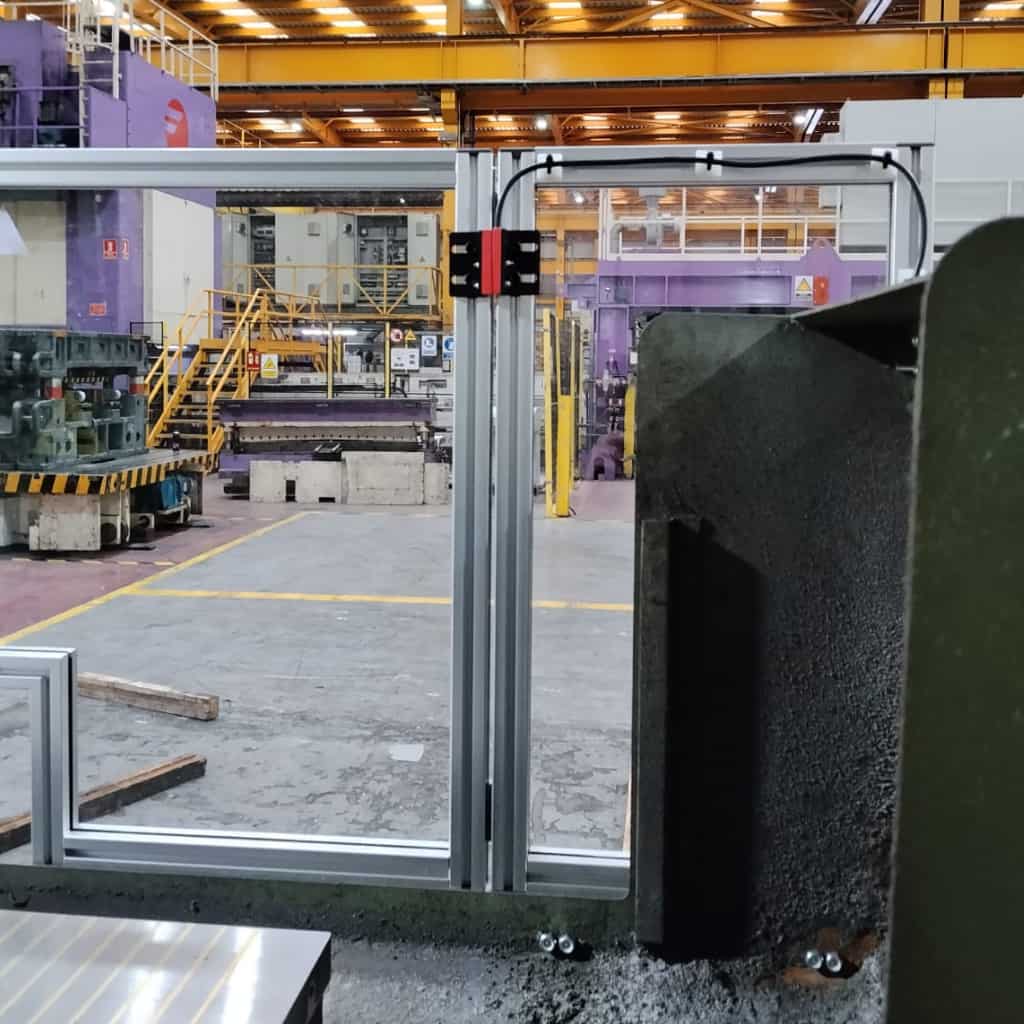
The solution we implemented from Group TICE consisted of the Installation of a polycarbonate and aluminium profile structure designed to prevent access to the grinding wheel of the machine. This structure included two doors, which allowed the team's functionality to be maintained for necessary operations, while controlling access security at all times.
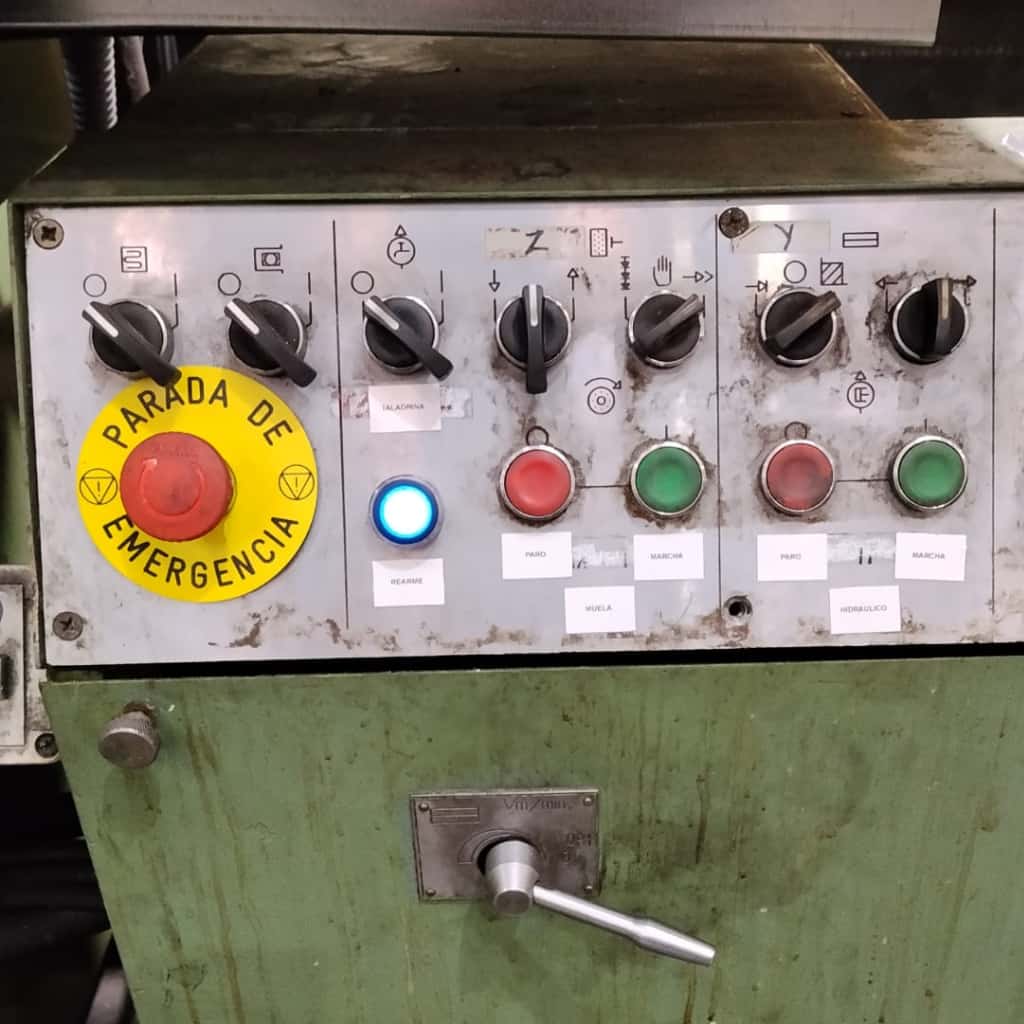
And on these doors were installed two magnetic sensors enseriados, integrated along with their corresponding Emergency stop and managed through a relay safety. In this way, if any of the doors open, the machine stops automatically. This system ensures that the equipment cannot continue to operate while there is open access to a dangerous area.
Furthermore, they were installed two covers under the table from the machine in order to prevent access to the shafts. This part of the performance was particularly important, as the shafts constituted another relevant risk point and had to be protected without interfering with the equipment's own movement.
The combination of these elements allowed for the development of a robust, secure solution tailored to the machine's needs, in line with the criteria we apply in our Machinery adaptation projects according to Royal Decree 1215/1997..
Difficulties encountered during the adaptation of the surface grinder
As is common in many industrial machinery upgrade projects, a key part of the work involved resolving the interferences between safety and the natural movement of the machine itself.
In this case, one of the main difficulties appeared in the design of the axis guards, as it was necessary to consider that these were introduced into the machine according to the direction in which the table moved. In other words, a standard guard could not simply be fitted, because it could interfere with the operation of the equipment or not provide adequate protection in all working positions.
This type of detail marks the difference between a superficial performance and true technical suitability. It's not just about “putting a guard in place”, but about understanding how the machine works and designing a solution that maintains safety in all its operating conditions.
How was the technical solution resolved and what advantages does it offer?
To resolve this situation, a gap was left for the shaft without it being possible to reach that dangerous area, and the decision was made to place the guard on the top of the table instead of the sides. This decision allowed for the protection of the moving parts to be compatible with the movement of the table, avoiding dangerous access without compromising the machine's operation.
The main advantage of this solution is that it effectively improves security without negatively impacting operations. This is fundamental in industrial environments, where any security measure must be integrated with the production process to be truly useful and sustainable over time.
Among the improvements this adaptation brings are:
- Limitation of access to dangerous areas,
- Automatic machine stop on opening protective doors.,
- greater safety for operators and maintenance personnel,
- Improvement of safety perception in the plant,
- Technical adaptation of the equipment to safer operating conditions.
Ultimately, the solution not only protects, but also organises the safe operation of the machine and helps personnel to work with greater confidence.
Benefits of adapting industrial machinery with custom-made protections
The suitability of industrial machinery offers advantages that go far beyond preventive compliance. Firstly, it reduces the probability of accidents by acting directly on risk points. Secondly, it allows for continued use of existing machinery without the need to replace the equipment entirely, something particularly valuable in facilities with robust and productively sound machines.
It also improves the company's preventative culture. When an organisation invests in making its machinery safer, it sends a clear message to the team: safety is an integral part of how we work. This helps to generate greater internal commitment and reinforce staff confidence in the means of production.
Furthermore, a properly protected machine offers greater assurances in internal reviews, audits, or continuous improvement processes, as the company can demonstrate that it has taken action on the real risks of the equipment with concrete technical solutions.
Grupo TICE | Specialists in machinery adaptation and industrial safety
At Grupo TICE, we develop industrial machinery adaptation projects, designing bespoke solutions to enhance the safety of equipment in use and tailor it to the specific needs of each installation. In actions like this, involving a surface grinding machine with the installation of guards, sensors, and a safe stop system, our work focuses on finding the balance between safety, functionality, and technical feasibility.
Every machine requires a specific study, because every production process, every access point and every risk is different. That is why we approach each project from a technical, practical and results-oriented perspective.
If your company has old machinery, equipment without adequate guards, or risk areas that require a safe and functional solution, at Grupo TICE we can help you analyse the situation and define the most suitable adaptation for your plant. Contact our technical team to study your case by click here.