The CE Marking is a fundamental requirement for the marketing and commissioning of machinery within the European economic area. Despite its importance, there are still many doubts and confusions surrounding its application, especially when we talk about CE marked used machinery, amended or imported. In this article, we address the aspects that cause the most confusion, bringing clarity from a technical and regulatory perspective.
What is CE marking? What is CE?
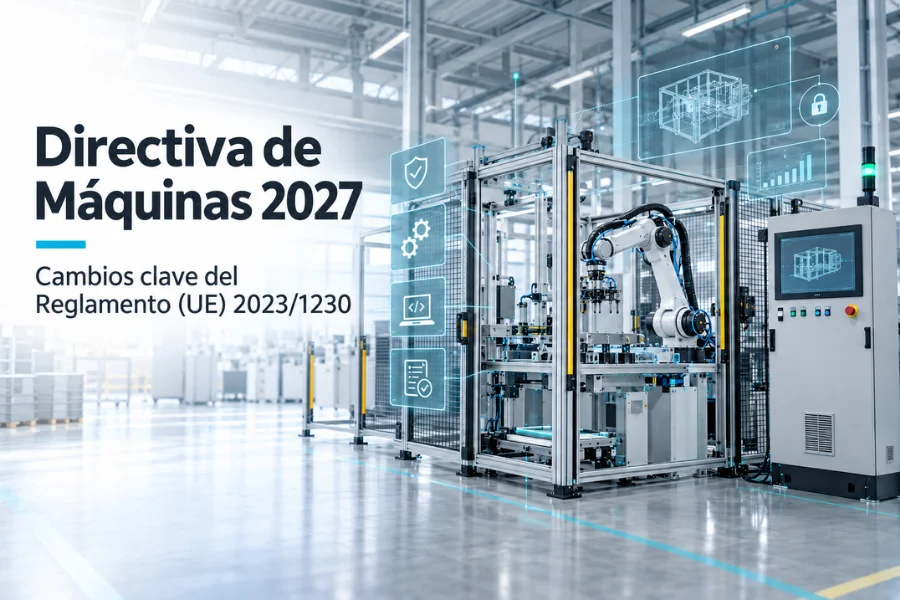
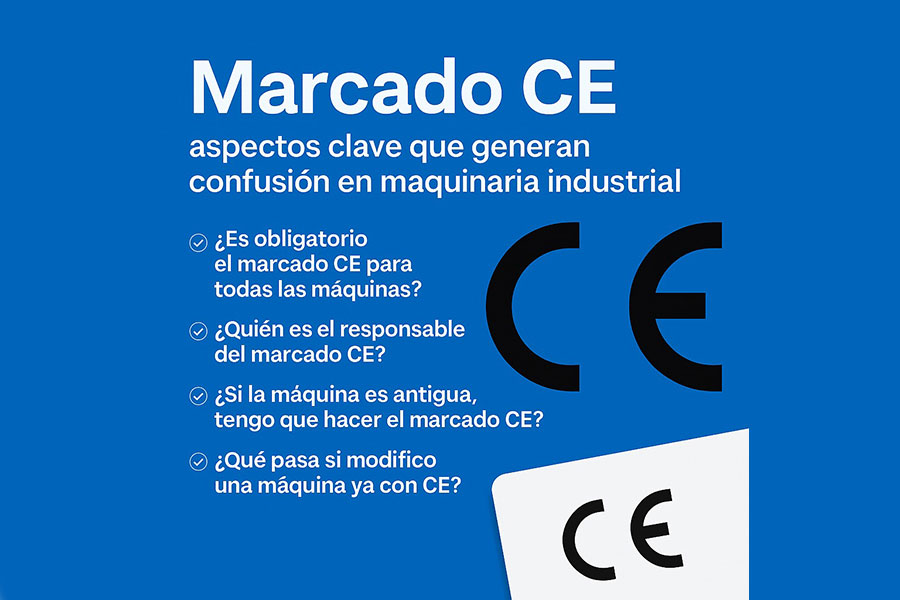
The CE marked («European Conformity») is a symbol indicating that a product complies with the essential requirements for safety, health, and environmental protection established by applicable European directives. In the case of machinery, the main reference is the Machinery Directive 2006/42/EC.
Put the CE mark on a machine means that a conformity assessment of machinery in a suitable manner that a procedure has been followed conformity assessment of machinery, which may include tests, verifications, and the compilation of a technical file.
When is CE marking of machinery mandatory?
Not all machines need to carry CE marked. It's mandatory only when:
- This is new machinery manufactured within the EU.
- It is imported from outside the European Economic Area.
- is carried out Substantial modification that could affect its operation or safety.
An old machine, manufactured before 1995 and without modifications, is not required to have CE marking, but must comply with the RD 1215/97 on minimum safety provisions.

Substantial modifications and CE marking: a critical point
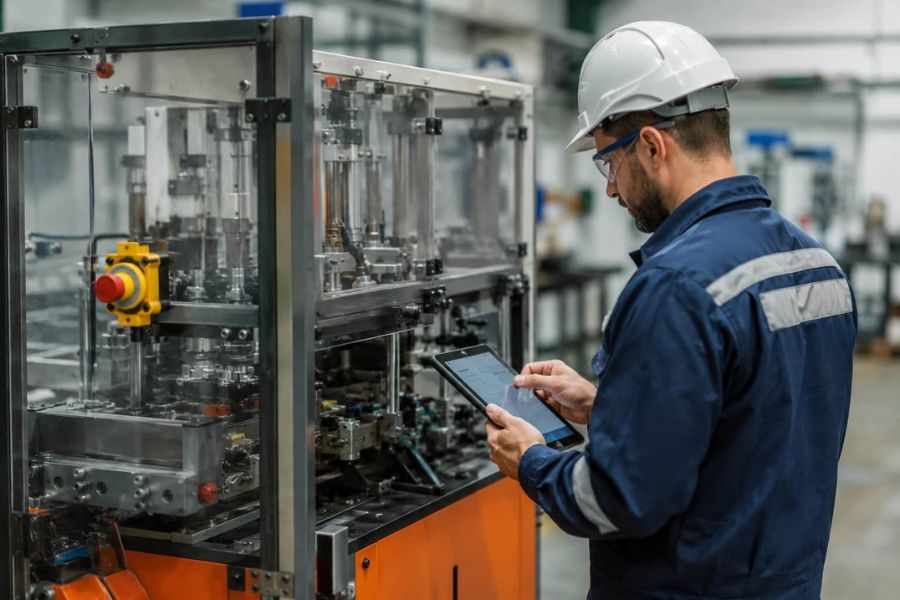
One of the most common mistakes is thinking that a machine that already has CE machinery certificate can be freely modified without affecting its conformity. A typical case is that of a plastics company that incorporated a new automated feeding system into an existing extruder. By not carrying out a new risk assessment or updating the technical documentation, it exposed itself to a serious breach of CE marking regulations. These types of situations are considered Substantial modifications to CE machinery, and require a complete review of equipment compliance. that a machine already has CE machinery certificate it can be freely modified without affecting compliance. The reality is different: if structural or functional modifications are made, or safety systems are removed, it may be considered a «new machine» for legal purposes, requiring a new CE certification.
For example, if a company replaces the perimeter protection system of a robotic cell with a non-certified one, it will have to completely re-evaluate the risks, update the technical documentation, and issue a new EC Declaration of Conformity.
In this case, the party responsible for the modification is considered manufacturer for the purposes of the regulations, a new file, manual, must be prepared, EC Declaration of Conformity and put back the CE mark.
The manufacturer is responsible for CE marking.
- The manufacturer, if the machine is new.
- The importer, if you are coming from outside the EU.
- The User o integrator, If the machinery is substantially modified.
In many cases, companies that acquire used machinery from abroad or integrate it into production lines are unaware that they are legally taking on the role of a manufacturer.
CE Machinery Certificate: what does it include?
The concept of CE machinery certificate must not be confused with a simple document or stamp. The CE certification entails a set of requirements and evidence
- Risk analysis in accordance with ISO 12100.
- Verification of compliance with essential safety requirements.
- Preparation of the complete technical file.
- Instruction manual writing.
- Broadcast of the EC Declaration of Conformity.
- Placement of the CE mark visible in the machinery.
En algunos casos, se puede requerir la intervención de un In some cases, the intervention of a Notified body, especially for machinery considered dangerous (Annex IV of the Machinery Directive).
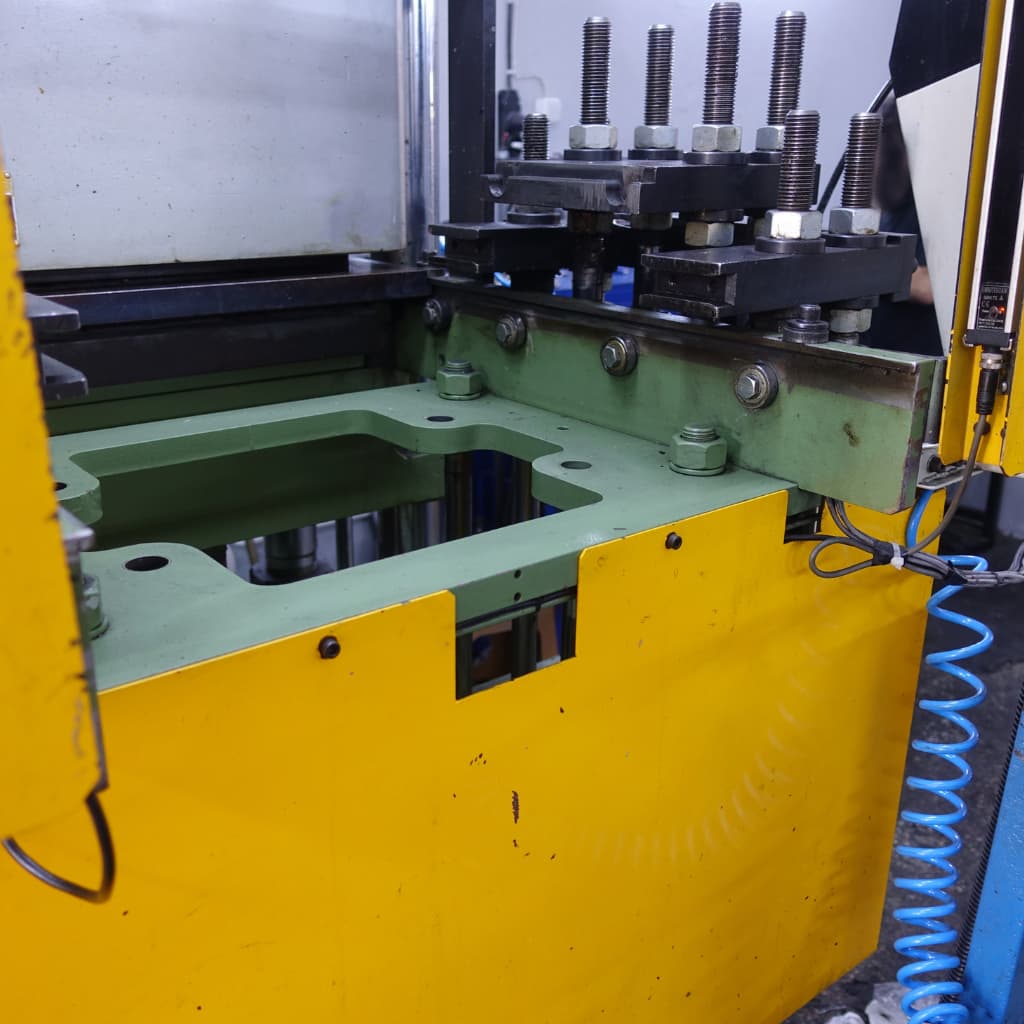
Can I import a used machine without a CE mark?
Yes, but it's not enough for it to work or have been in use. It will need to go through a full process of suitability that guarantees its conformity with current requirements, including the carrying out of the CE certification, with all the required technical documentation. To learn the difference between CE marking and conformity, visit our blog here.
This procedure requires technical knowledge and up-to-date regulations, which is why many companies turn to specialised engineering firms to ensure legal and technical safety.
Can I import a used machine without a CE mark?
Yes, but it's not enough for it to work or have been in use. It will need to go through a full process of suitability that guarantees its conformity with current requirements, including the carrying out of the CE certification, with all the required technical documentation. To learn the difference between CE marking and conformity, visit our blog here.
This procedure requires technical knowledge and up-to-date regulations, which is why many companies turn to specialised engineering firms to ensure legal and technical safety.
Mandatory documentation according to CE marking regulations
The regulation of CE marking machinery requires keeping the following documents for at least 10 years:
- Technical file (drawings, calculations, regulatory justification).
- Instruction and maintenance manual.
- EU Declaration of Conformity.
- Justification for risk analysis.
This documentation must be available in case of inspection, audit or work accident.
The CE marked it is not a simple administrative procedure, but a guarantee of security for people, processes, and the company. A thorough understanding of Machinery Directive, as well as the implications of CE marking machinery, It is essential to avoid penalties, accidents, or legal liabilities.
At TICE we are specialists in CE certification, Risk assessment and suitability RD 1215/97. If you have doubts about a specific machine, its modification, or its legality, we can help you resolve them with a technical, rigorous, and approachable approach.