Success story: Safety in the use of industrial punching machines
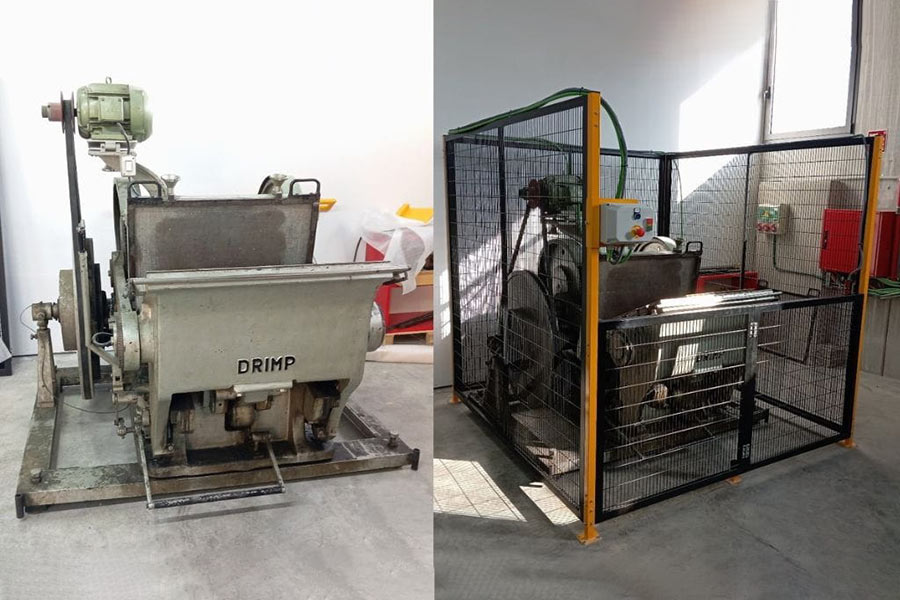
At TICE, industrial safety is one of our top priorities. Recently, we carried out an upgrade to comply with RD 1215/97 for an industrial die-cutting machine, with the aim of ensuring a safer and more efficient working environment for our client in Valencia. Translated with DeepL.com (free version)
Within the industrial sector, this type of machine tool is essential for cutting and shaping various materials. Used primarily in sectors such as the automotive, cardboard and plastics industries, these machines are the best option in terms of productivity, efficient and capable of delivering precise results in their finished parts.Translated with DeepL.com (free version)
Risk Identification and Management for Machinery
Our client contacted us to bring the machine into line with safety regulations, given the potential risk to operators’ health. From TICE, our team of engineers set to work to draw up a plan and implement solutions that would allow for the safe operation of the machine, preventing accidents and ensuring compliance with the Royal Decree
Safety standards and regulations for machinery
In any modern industrial setting, machinery is subject to safety regulations that play a crucial role in protecting workers and preventing workplace accidents. It is therefore essential to maintain a safe working environment in order to improve efficiency and productivity, and to ensure safety by complying with legal standards. At both European and national levels, there are various regulations governing safety in the operation of machinery, such as:
This sets out the minimum health and safety requirements for the use of work equipment in the workplace. It requires employers to ensure that machinery meets the minimum safety requirements before it is put into service and whilst it is in operation.
This directive is responsible for ensuring the regulation of the marketing and use of machinery within the European framework. It therefore requires that machinery comply with the essential health and safety requirements before it is sold within Europe or put into service.
This standard sets out the general principles for the safe design of machinery, identifying potential hazards and establishing methods to mitigate them.
Finally, this standard regulates the electrical aspects of machinery safety, setting out the necessary requirements for the electrical equipment of machinery.
Solution implemented: Perimeter Security Fencing and Access Control
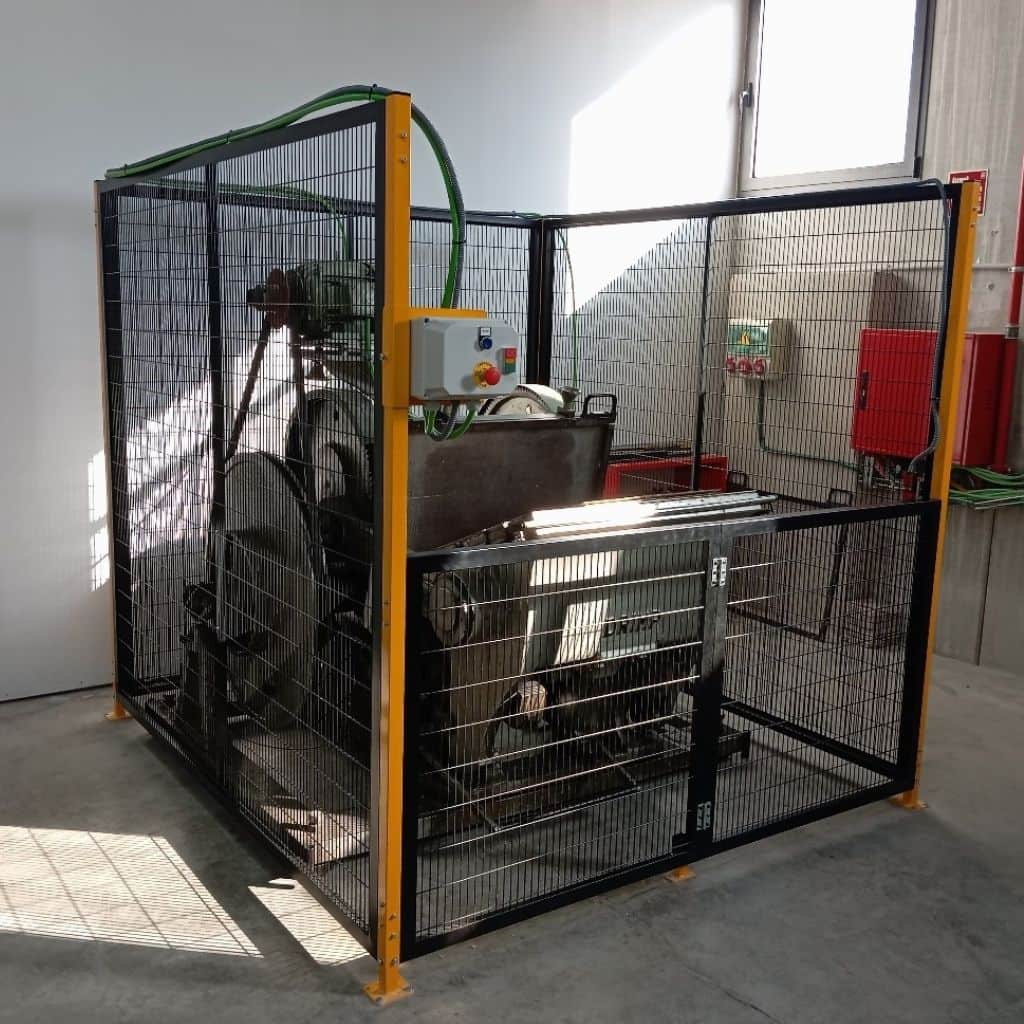
To improve safety when using the industrial die-cutting machine and to comply with Royal Decree 1215/1997, we have installed a perimeter safety fence that prevents access to hazardous areas whilst the machine is in operation. With this solution, we protect operators from potential entrapment or accidental impact.
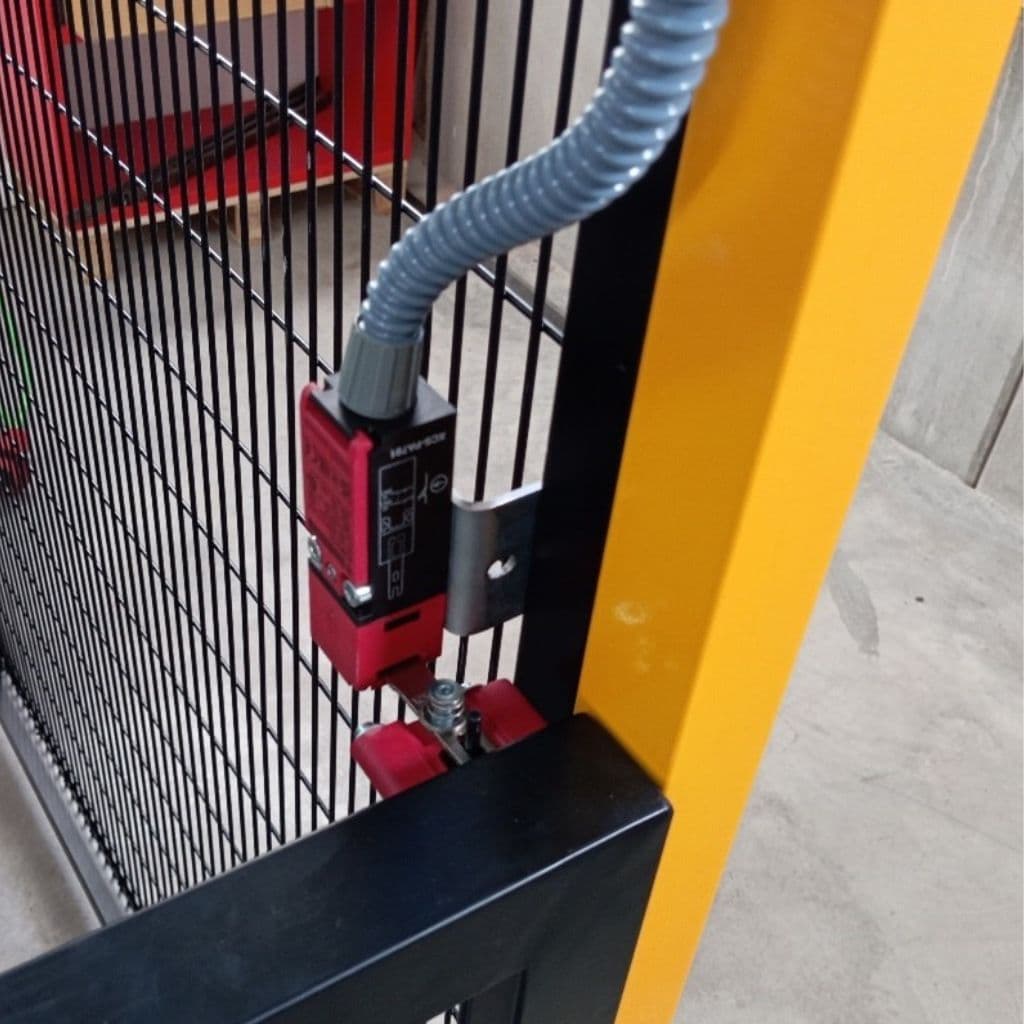
In addition, we have fitted a interlock sensor on the access doors to ensure that the punching machine cannot start if any of them are open. This prevents operators from entering the danger zone whilst the punching machine is in operation, thereby reducing the risk of accidents.
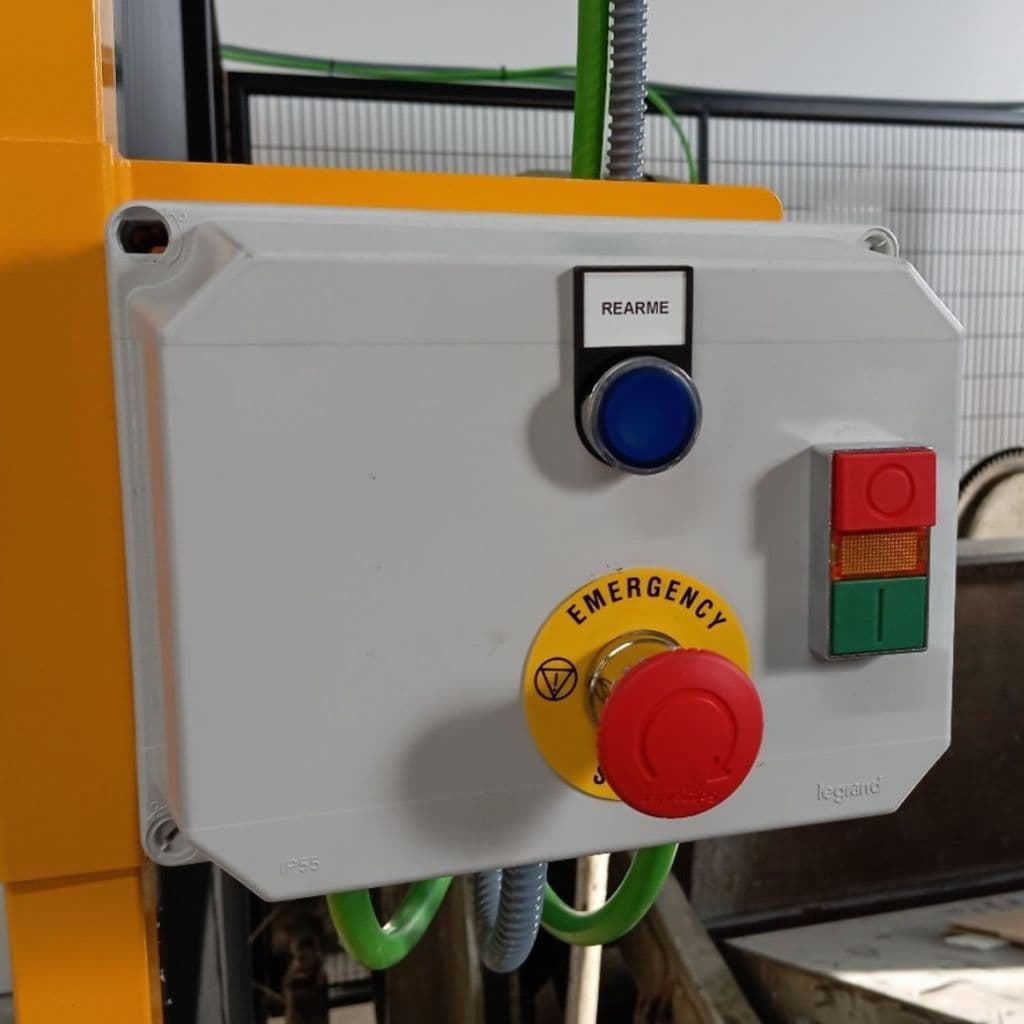
In addition, we have fitted a start-stop switch on one of the sides, enabling workers to stop the machine immediately in the event of an emergency. This improvement not only makes the work safer, but also facilitates compliance with regulations without affecting production.
Thanks to these measures, we at TICE, based in Valencia, have managed to reduce risks, creating a safer working environment that complies with current safety regulations.
Required Personal Protective Equipment (PPE)
Operating an industrial die-cutting machine involves risks typically associated with cuts, entrapment, flying debris and noise; it is therefore essential to use Personal Protective Equipment (PPE) appropriate to the task. The purpose of this safety equipment is not only to protect the operator but also to ensure compliance with health and safety regulations.
- Cut-resistant safety gloves: Because they are used to handle metal parts and other materials that may have sharp edges. Furthermore, these gloves must also offer cut and abrasion resistance, such as those made from materials like Kevlar or with a polyurethane coating.
- Eye protection: It is important to wear safety goggles with polycarbonate lenses and side protection, or face shields, to protect against flying particles generated during the die-cutting process.
- Hearing protection: Industrial punching machines can generate high noise levels when they start up. Depending on the operator’s level of exposure, it is advisable to use earplugs or protective ear muffs that comply with the EN 352 standard.
- Tight-fitting workwear: You should avoid wearing loose-fitting or baggy clothing to prevent it from getting caught in machinery. Furthermore, clothing must be durable and comply with industrial safety regulations.
- Safety footwear: The use of safety footwear or boots with fibreglass toe caps to protect the feet from falling objects or impacts.
Compliance with Royal Decree 1215/1997 in Valencia
At TICE, our mission is to ensure that each of our clients’ machines complies with safety standards, in line with regulation RD 1215/1977 to provide safer and more productive working environments. Based in Valencia, we provide solutions for machinery modernisation and retrofitting throughout Spain, following a comprehensive process that ranges from design and manufacture to the installation of the necessary safety systems and their final certification as suitable and safe work equipment.
If you need to adapt your industrial machinery to ensure it does not pose a risk in your workplace and to ensure it complies with current regulations, please do not hesitate to contact us. Our team of experts is on hand to offer you the best solution tailored to your business. Get in touch and improve the safety of your machinery with us!